

Have you ever looked closely at your fingernails and noticed thin lines running along the surface? You may have wondered whether they are normal or a sign that something is happening inside your body.
Nail lines are common, and many are harmless. However, their appearance, direction, color, and whether they develop suddenly can provide useful clues. The important thing is to understand the difference between ordinary ridges and changes that deserve medical attention.
The viral claim that lines on your nails automatically mean cancer is misleading. Most nail ridges are not a sign of cancer, although a new or changing dark streak under a nail should be examined by a healthcare professional.
1. Normal Aging
One of the most common explanations for vertical nail lines is simply getting older.
These ridges run from the cuticle toward the tip of the nail, much like fine lines on skin. They may become more noticeable with age as nail growth and the nail’s surface change over time.
If the lines are subtle, appear on several nails, and have been present for a long time without other symptoms, they are often nothing to worry about.
What you can do: Apply hand cream regularly, gently moisturize your nails and cuticles, and avoid excessive buffing to make the nail surface look smoother.
2. Repeated Nail Damage or Manicures
Your nails can develop visible ridges or irregularities after repeated physical stress.
Frequent picking, nail biting, aggressive filing, rough manicures, or damage around the cuticle can affect how the nail grows. Everyday knocks and injuries may also change a nail’s appearance.
Sometimes, the effect becomes visible only as the nail grows out, so you may not immediately connect the lines to an earlier injury.
What you can do: Handle your nails gently, avoid picking at the cuticles, and give damaged nails time to grow. If a nail becomes painful, separates from the nail bed, or develops an unexplained discoloration, seek medical advice.
3. Dry or Brittle Nails
Dryness can make nails rough, fragile, and more prone to splitting or breaking. Regular exposure to water, household cleaning products, and harsh nail treatments can contribute to nail damage.
Dry nails do not always cause ridges, and ridges alone do not prove that your body is dehydrated. However, protecting your nails from repeated exposure to irritating substances can improve their overall condition.
What you can do: Use a moisturizer after washing your hands, wear protective gloves when cleaning, and limit harsh nail products if your nails are becoming brittle.
4. A Recent Illness or Major Physical Stress
Horizontal grooves that run across a nail are different from the fine vertical ridges many people develop with age.
These deep horizontal grooves are sometimes called Beau’s lines. They can appear when nail growth temporarily slows or stops because of a significant illness, high fever, injury, or certain medical treatments.
Because fingernails grow slowly, the groove may become visible weeks after the event that caused it. The affected portion generally moves toward the tip as the nail grows.
A single groove does not identify a particular disease. If deep horizontal lines appear without an obvious explanation, or several nails change at once, a healthcare professional can help determine whether further evaluation is needed.
5. Nutritional Problems or an Underlying Health Condition
Nails can sometimes change in appearance when a person has a nutritional deficiency or an underlying medical condition. However, nail lines alone cannot tell you which nutrient may be missing—or whether a deficiency exists at all.
For example, iron deficiency can be associated with certain nail changes, particularly nails that become unusually spoon-shaped. Thyroid conditions and other long-term health problems may also affect nail appearance.
It is important not to assume that every ridge means you need iron, zinc, or biotin supplements. Taking supplements without knowing the cause may be unnecessary, and some can interfere with medicines or laboratory tests.
If nail changes occur alongside persistent fatigue, unusual weakness, changes in weight, or other new symptoms, discuss them with a healthcare professional. They can decide whether an examination or blood tests are appropriate.
6. Skin Conditions That Affect Nail Growth
Some skin conditions can affect the nail itself, even when the surrounding skin symptoms are mild.
Psoriasis, eczema, and other inflammatory conditions may cause nail pitting, discoloration, thickening, separation, or an uneven surface. These changes do not always look like simple ridges, and several different conditions can produce similar symptoms.
A clinician may need to examine both your nails and your skin to identify the cause. Treatment depends on the underlying condition rather than the appearance of the nail alone.
If your nails become increasingly distorted, painful, thickened, or detached, do not rely on cosmetic treatments to hide the changes.
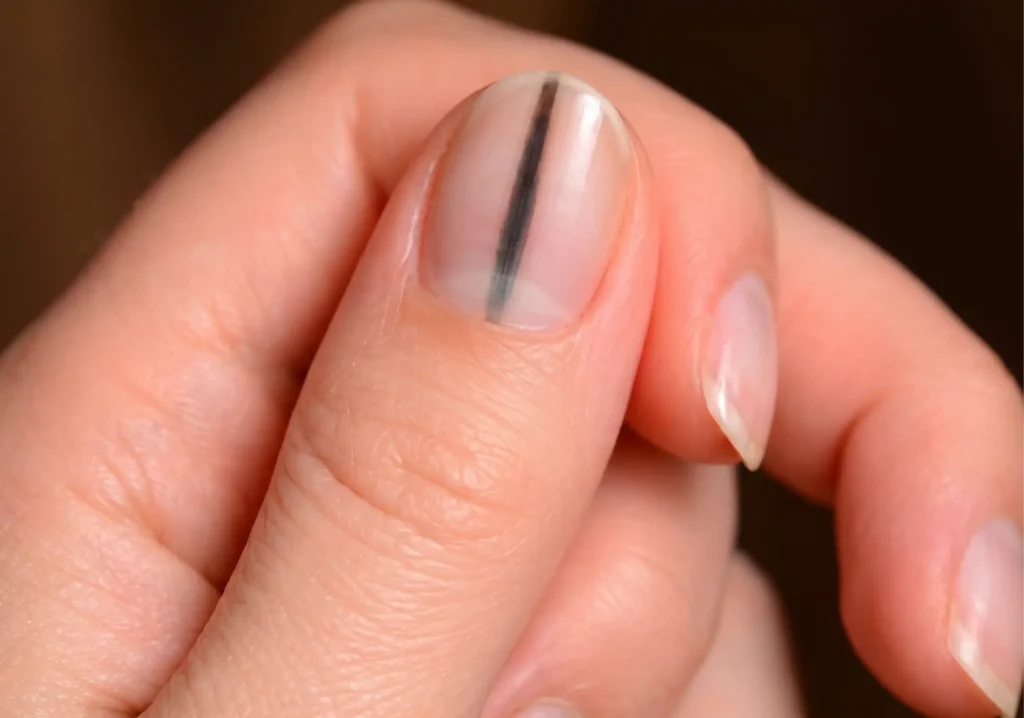
7. A Dark Vertical Streak That Needs Medical Attention
This is the warning sign behind many alarming social media posts, but it needs to be understood correctly.
A new brown or black band running lengthwise beneath a nail can have several explanations, including pigment changes, an injury, or other nail conditions. In uncommon cases, it may be a sign of subungual melanoma, a type of skin cancer that develops under a fingernail or toenail.
Pay particular attention if the streak is new, becomes wider or darker, has irregular coloring, or extends onto the skin around the nail. Nail splitting, unexplained lifting, or a bump beneath the nail are also changes worth checking.
Do not wait for pain: nail melanoma may not hurt in its early stages. Arrange an appointment with a dermatologist or another qualified healthcare professional if you notice an unexplained new dark band or a streak that is changing. An examination is the way to assess whether it needs further investigation.
How to Tell Whether Nail Lines Need Checking
The direction and color of a line can help you decide what to pay attention to, but they cannot establish a diagnosis on their own.
- Fine vertical ridges on several nails: Often harmless, especially when they develop gradually.
- Deep horizontal grooves: May indicate that nail growth was temporarily interrupted.
- A new brown or black streak: Should be assessed, particularly if it changes or affects only one nail.
- Lines accompanied by pain, swelling, nail separation, or unexplained changes in color or shape: Deserve medical attention.
Photographing a changing nail in good lighting may help you track its appearance, but do not use photographs as a substitute for medical evaluation when a warning sign is present.
What You Should Remember
Lines on your nails do not automatically mean something serious is wrong. Ordinary vertical ridges are common, and nail changes can result from aging, injury, dryness, illness, or skin and medical conditions.
The key is to pay attention to what has changed. A new, unexplained dark streak is different from a few fine ridges that have looked the same for years.
Do not panic over every nail line—but do not ignore a new or changing dark streak. If you are concerned, getting it checked by a qualified healthcare professional is safer than trying to diagnose it from a social media post.


