
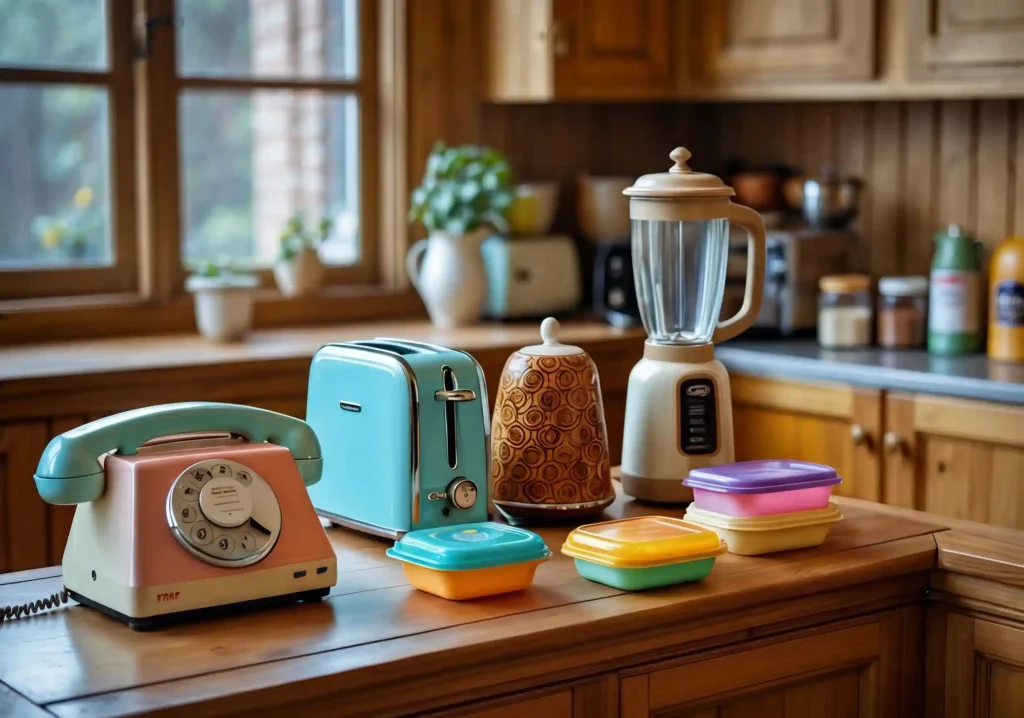

If you grew up in the 1980s, the kitchen was probably one of the busiest places in your house. It was where breakfast was made before school, snacks appeared after homework, and family dinners brought everyone together.
American kitchens during the decade were filled with colorful plastic containers, patterned casserole dishes, chunky appliances, handwritten recipes, and everyday tools that seemed to last forever. Some were genuinely useful, while others became memorable simply because nearly everyone seemed to have something similar.
Not every family owned all these things, of course. But these 40 kitchen staples capture the familiar look and feel of many American homes during the 1980s.
1. Tupperware Containers
Those colorful plastic containers were practically a kitchen institution. Moms used them to store leftovers, pack lunches, keep cookies fresh, and save nearly every bit of food that could be eaten later. Finding the matching lid, however, was a challenge of its own.
2. A Tupperware Pitcher
A brightly colored pitcher with a snug lid often lived in the refrigerator, filled with water, iced tea, lemonade, or powdered fruit drink. It was especially useful during summer, when children seemed to ask for something cold to drink every few minutes.
3. Pyrex Measuring Cups
The glass measuring cup was a familiar sight on kitchen counters. Its printed measurements made it useful for baking, mixing ingredients, and measuring liquids. Pyrex even redesigned its measuring cups in 1983 to make them easier to stack and store.
4. Patterned CorningWare Casserole Dishes
Blue Cornflower and other decorative CorningWare patterns appeared in many American kitchens. These dishes could move from preparing a meal to serving it at the table, making them especially practical for busy families.
5. Corelle Dinner Plates
Lightweight, durable Corelle plates were popular for everyday family meals. Their simple designs and stackable shapes made them easy to store, while their durability helped them remain in use for years.
6. A Slow Cooker
The slow cooker was a lifesaver for families who wanted dinner ready after a long day. Moms could add meat, vegetables, broth, and seasonings in the morning, then return home to a meal that had been cooking for hours.
7. A Big Microwave Oven
Microwave ovens became increasingly common in American homes during the 1980s. Early models often looked bulky by today’s standards, but they made reheating leftovers, warming drinks, and preparing quick snacks much easier.
8. An Electric Can Opener
Instead of opening cans by hand, families could use an electric can opener mounted on the counter or stored in a cabinet. It was particularly handy for opening soup, vegetables, beans, and other canned ingredients during meal preparation.
9. A Hand Mixer
Before modern countertop mixers became common in more homes, a hand mixer was an essential baking helper. It could whip cream, mix cake batter, beat eggs, and prepare frosting without requiring much storage space.
10. A Stand Mixer
Families who baked regularly might also have owned a heavier stand mixer. It was ideal for birthday cakes, cookies, bread dough, and holiday desserts. The appliance often stayed on the counter because it was too heavy to move around frequently.
11. An Electric Skillet
An electric skillet offered an extra cooking surface without requiring another burner on the stove. It could be used for pancakes, fried potatoes, eggs, grilled sandwiches, and quick family dinners.
12. A Crock of Wooden Spoons
Wooden spoons were dependable tools for stirring sauces, mixing batters, and cooking soups. Many moms kept several together in a jar or crock near the stove, ready to grab without opening a drawer.
13. A Set of Plastic Measuring Cups and Spoons
Recipes often required precise measurements, especially when baking. A set of plastic measuring cups and spoons made it easier to measure flour, sugar, spices, and liquids, and the pieces could be stored together in a kitchen drawer.
14. A Recipe Box Filled With Cards
Long before recipe apps and online cooking videos, family recipes were written on index cards and tucked into a small box. Some cards contained handwritten notes, substitutions, or stains from years of use. Favorite recipes were passed from one generation to another.
15. A Well-Worn Cookbook
A large cookbook sat on many kitchen shelves, ready to help with everything from weekday dinners to special-occasion desserts. Pages might be folded at favorite recipes, with handwritten adjustments showing how a family had adapted them over the years.
16. A Cookie Jar
A cookie jar on the counter could hold homemade cookies, store-bought treats, or whatever snacks the family wanted to keep within reach. Some were shaped like animals or characters, while others were simple ceramic jars with lids.
17. A Covered Butter Dish
A covered dish holding a stick of butter was a familiar sight in many kitchens. It made spreading butter on toast, rolls, and baked potatoes convenient. Families differed in how they stored butter, but the traditional covered dish remained a recognizable kitchen accessory.
18. A Sugar Bowl
A sugar bowl often sat near the coffee maker or tea supplies. Whether it was made of glass, ceramic, or porcelain, it offered an easy way to sweeten hot drinks without bringing the entire sugar bag to the table.
19. A Salt and Pepper Set
Salt and pepper shakers were everyday essentials, often kept on the dining table or beside the stove. Some were plain glass containers, while others featured decorative designs that matched the kitchen’s style.
20. A Ceramic Cookie Sheet or Baking Pan Collection
Metal baking sheets and pans were indispensable for making cookies, roasting vegetables, and preparing family desserts. Over time, the most-used pans often developed darkened edges and scratches that showed just how frequently they had been used.
21. A Bundt Pan
The Bundt pan’s distinctive ring shape helped home bakers create cakes that looked impressive without complicated decoration. It was a popular choice for coffee cakes, chocolate cakes, and desserts served at family gatherings.
22. A Handheld Potato Masher
Mashed potatoes were a regular feature of many family dinners, and a handheld masher was a simple way to prepare them. It could also mash soft vegetables and other ingredients without needing an electric appliance.
23. A Metal Colander
A colander was essential for draining spaghetti, rinsing vegetables, washing fruit, and preparing ingredients. Whether it was stainless steel or lightweight plastic, it was one of those tools that got used repeatedly throughout the week.
24. A Plastic Ice Cube Tray
Before automatic ice makers became common in many households, families filled plastic trays with water and placed them in the freezer. Getting the cubes out sometimes required twisting the tray or running a little water over the bottom.
25. A Toast-Rack or Countertop Toaster
A toaster was a morning staple for many families. It quickly prepared bread for breakfast, while toast could be topped with butter, jam, peanut butter, or cinnamon sugar for a simple snack.
26. A Drip Coffee Maker
The smell of coffee brewing was part of the morning routine in many homes. Drip coffee makers allowed parents to prepare several cups at once, and the glass carafe often stayed on a warming plate while the family got ready for the day.
27. A Teakettle
A traditional kettle was used to heat water for tea, instant drinks, hot chocolate, and other kitchen needs. Some families preferred stovetop kettles, while others used electric models. Either way, a kettle was a practical item to keep close at hand.
28. A Set of Oven Mitts and Potholders
Oven mitts and potholders protected hands when handling hot baking dishes and pans. They were often decorated with florals, checks, fruit patterns, or other cheerful designs that matched the kitchen’s linens.
29. A Kitchen Timer
A small mechanical or electric timer helped home cooks keep track of baking, boiling eggs, and other cooking tasks. The familiar ticking sound of a mechanical timer could be heard while dinner or dessert was being prepared.
30. A Wall-Mounted Kitchen Phone
For many families, the kitchen phone was the household communication center. A corded telephone with a long, curly cord let someone chat while leaning against the counter or walking a few steps away. It was also where parents answered calls while preparing dinner.
31. A Magnetic Refrigerator Door Covered With Notes
The refrigerator door often became a family noticeboard. Magnets held shopping lists, school reminders, appointment cards, coupons, children’s artwork, and sometimes a calendar that helped everyone keep track of the week.
32. A Junk Drawer
Almost every busy household seemed to have a drawer filled with miscellaneous items. Batteries, rubber bands, spare keys, twist ties, pens, scissors, takeout menus, and mystery screws could all end up there. Mom somehow knew where to look when something was needed.
33. A Roll of Paper Towels on the Counter
Paper towels made quick work of spills, greasy fingers, and messy food preparation. The roll usually sat near the sink or countertop, ready for whatever little accident happened next.
34. A Dish-Drying Rack
After washing dishes, families needed somewhere to let plates, cups, and utensils dry. A dish rack beside the sink provided a practical solution, particularly in kitchens where counter space was limited.
35. A Decorative Canister Set
Matching canisters often held flour, sugar, coffee, tea, or other dry ingredients. Some featured painted fruit, floral designs, or country-style patterns. They were both storage containers and part of the kitchen’s decoration.
36. A Plastic or Wooden Cutting Board
Cutting boards were essential for preparing vegetables, slicing bread, and trimming meat. Wooden boards offered a traditional look, while plastic versions were lightweight and easy to move around during meal preparation.
37. A Set of Steak Knives
Steak knives were useful for family dinners, backyard barbecues, and special occasions. They were often kept together in a drawer or in a small countertop holder, ready whenever a meal called for a sharper table knife.
38. A Juicer or Citrus Reamer
Fresh orange juice, lemonade, and other citrus drinks could be prepared with a simple manual reamer or a small electric juicer. Even families who rarely made juice from scratch might have owned a basic tool for squeezing lemons into recipes.
39. A Popsicle Mold
Homemade frozen treats were an easy way to cool down during hot weather. Parents could pour juice or powdered drink into reusable molds, freeze them, and hand the finished popsicles to children after school or during summer vacations.
40. A Kitchen Window Full of Plants
Many kitchens had a sunny windowsill with herbs, small houseplants, or a collection of pots. Some families grew parsley or mint for cooking, while others kept plants simply because they made the room feel warmer and more welcoming.
Why These Kitchen Items Still Bring Back Memories
The kitchens of the 1980s were not defined by smart appliances or connected devices. They were defined by practical tools, familiar routines, and objects that families used so often they became part of everyday life.
A colorful Tupperware container could remind someone of packed lunches. A recipe box could bring back memories of a parent’s favorite dessert. A slow cooker might recall the smell of dinner waiting after school.
Not every mom owned all 40 items, and kitchen styles varied from household to household. But these everyday objects capture the nostalgia of a decade when the kitchen was more than a place to cook—it was a gathering place for family, food, and memories.