
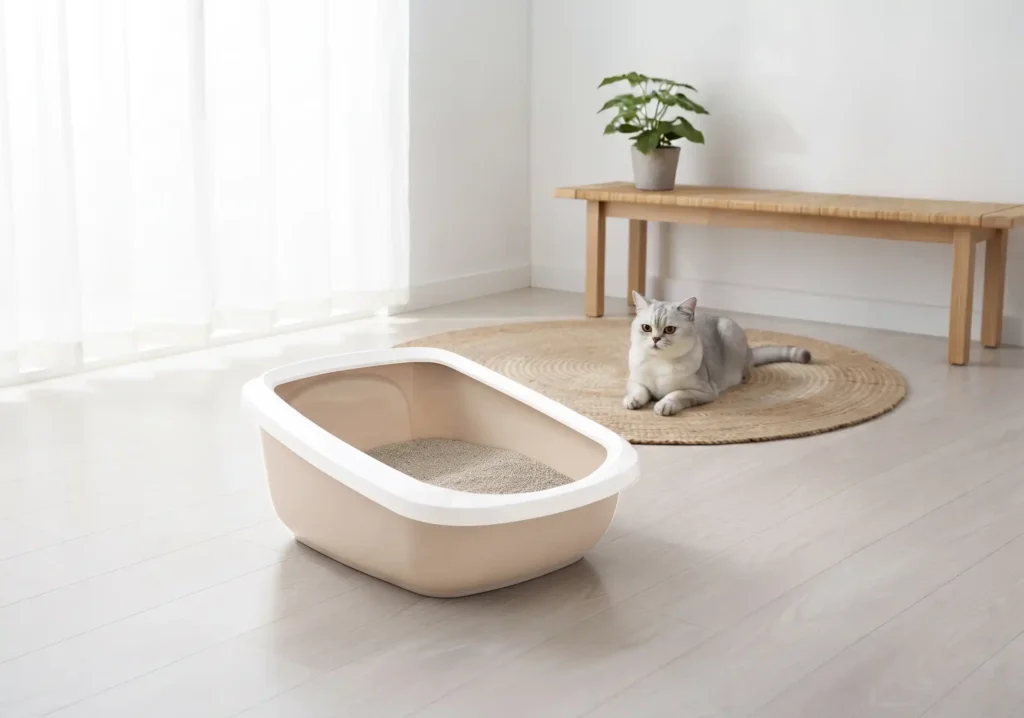

A litter box might seem like one of the simplest things in a cat’s home, but it can have a surprisingly big impact on everyday comfort.
Some cats avoid their litter boxes because they are too small, difficult to enter, poorly located, or not cleaned often enough. Others dislike a particular litter texture or feel uncomfortable using a box that is shared with another cat.
The good news is that improving your cat’s bathroom setup does not always require expensive equipment. A few thoughtful changes can make the space cleaner, more accessible, and more appealing.
Here are 19 practical litter box changes that can make a meaningful difference for your cat.
1. Choose a Bigger Litter Box
One of the most helpful changes is giving your cat enough room to move comfortably.
Some commercially available litter boxes are surprisingly small, especially for larger cats. A cramped box may make it difficult for your pet to turn around, dig, or find a comfortable position.
Veterinary behavior guidelines generally recommend a box around 1.5 times the cat’s length, measured from the nose to the base of the tail.
A large storage container without a lid can sometimes work as an affordable alternative, provided it is safe and easy for your cat to enter.
Why it helps: More space gives your cat room to move naturally instead of feeling restricted.
2. Try Unscented Litter
A litter that smells pleasant to humans may be unpleasant to a cat.
Many cats are sensitive to strong fragrances, especially when they are concentrated in a small enclosed space.
Unscented litter is often a good starting point because it avoids unnecessary perfumes and allows you to monitor odors more easily.
If your cat already uses a particular unscented litter comfortably, there may be no reason to change it.
Why it helps: A familiar, low-fragrance litter can make the box more comfortable for cats that dislike strong smells.
3. Scoop the Box Every Day
Even a large litter box can become unpleasant when waste is left inside for too long.
Removing urine clumps and solid waste at least once daily helps keep the area cleaner. Some cats are especially particular and may prefer their boxes to be scooped more frequently.
A small scoop and a nearby covered waste container can make the routine easier.
Why it helps: Regular scooping reduces accumulated waste and helps prevent unpleasant odors.
4. Keep the Litter Box Away From Food and Water
Cats generally prefer to keep their eating and bathroom areas separate.
Placing a litter box directly beside food or water dishes may make the arrangement less appealing.
Try choosing a separate location where your cat can comfortably access the litter box without passing through its feeding area.
This is particularly useful in smaller homes where available space is limited.
Why it helps: Separate areas allow your cat to eat, drink, and use the bathroom in more comfortable surroundings.
5. Find a Quiet but Accessible Location
A litter box should be somewhere your cat can reach easily without dealing with constant noise or interruptions.
A busy hallway, noisy laundry room, or area beside a frequently used appliance may make some cats uncomfortable.
Choose a quiet location that is still easy to access throughout the day.
Avoid hiding the box somewhere so isolated that your cat has to navigate difficult stairs or closed doors to reach it.
Why it helps: A calm, accessible location can make bathroom visits less stressful.
6. Consider an Open Litter Box
Covered litter boxes can look attractive and help contain scattered litter, but some cats dislike enclosed spaces.
A covered box may trap odors and limit visibility, making certain cats feel uncomfortable.
An open design gives your cat a clearer view of its surroundings and more room to enter and exit.
Not every cat dislikes covered boxes, so individual preferences matter.
Why it helps: An open box may provide better airflow and a more comfortable experience for cats that prefer visibility.
7. Use Low Sides for Kittens and Older Cats
A tall litter box can be difficult for a kitten, senior cat, or pet with mobility problems to enter.
Cats with arthritis or other joint discomfort may struggle with high edges, even if they have used the same box for years.
A box with a lower entrance can make access easier without requiring your cat to jump or climb.
If your cat needs high sides to prevent litter from spilling, consider a design with a low entrance and taller walls elsewhere.
Why it helps: Easier entry and exit can reduce physical difficulty for cats with limited mobility.
8. Provide Enough Litter Boxes
A single litter box may not be enough, particularly in a home with several cats.
A commonly recommended starting point is one box per cat, plus one additional box.
For example, a two-cat household can begin with three boxes, although individual needs and relationships between cats can affect the arrangement.
In a multi-level home, make sure cats have convenient access to a box on each floor.
Why it helps: Multiple boxes can reduce competition and give cats more bathroom options.
9. Place Boxes in Separate Locations
Simply placing several litter boxes side by side does not always solve the problem.
Cats may treat adjacent boxes as one shared bathroom area rather than separate choices.
If possible, distribute them across different quiet locations in the home.
This is especially helpful when one cat tends to block another cat’s access or when pets have different preferences.
Why it helps: Separate locations provide more opportunities for privacy and reduce the chance of one cat controlling access.
10. Keep the Litter at a Comfortable Depth
Too little litter may make digging and covering waste difficult.
Too much litter can also be uncomfortable for some cats and may lead to excessive scattering.
Many cats do well with a relatively shallow layer of fine litter, although preferences vary.
Start with the depth recommended by the litter manufacturer, then observe whether your cat can comfortably dig and cover its waste.
Why it helps: A suitable litter depth makes the box easier to use and maintain.
11. Choose a Texture Your Cat Likes
Not all litter feels the same under a cat’s paws.
Clay-based clumping litter, recycled paper, wood pellets, and other materials have different textures and weights.
Some cats prefer fine, sand-like particles, while others may accept a different material.
If your cat suddenly starts avoiding its litter box after a litter change, the texture could be one possible reason.
You can test preferences by offering different litter types in separate boxes rather than changing everything at once.
Why it helps: Matching your cat’s preference may encourage more consistent litter box use.
12. Avoid Strong Cleaning Chemicals
A clean litter box is important, but harsh cleaning products can leave strong odors or residues.
When washing the box, use mild, unscented soap and water, rinse thoroughly, and allow it to dry before adding fresh litter.
Avoid ammonia-based cleaners and strong fragrances.
Also, never mix household cleaning chemicals, especially products containing bleach and ammonia.
Why it helps: Gentle cleaning keeps the box hygienic without introducing strong chemical smells.
13. Replace Old or Damaged Litter Boxes
Plastic litter boxes can develop scratches over time.
Those scratches may make the surface harder to clean thoroughly and can hold onto unpleasant odors.
If a box has deep scratches, cracks, or persistent smells even after proper cleaning, replacing it may be worthwhile.
Choose a sturdy design that is easy to wash and large enough for your cat.
Why it helps: A clean, undamaged surface is easier to maintain and more pleasant for everyday use.
14. Give Your Cat a Clear Way In and Out
Cats generally feel more comfortable when they can approach and leave their litter boxes without being trapped.
Avoid placing a box in a tight corner where another pet or household activity could block the entrance.
In multi-cat homes, make sure one cat cannot easily guard the only available exit.
An accessible position can be especially important for timid cats.
Why it helps: A clear entrance and exit can help cats feel safer when using the litter box.
15. Use a Litter Mat Outside the Box
Some litter inevitably sticks to a cat’s paws and gets carried onto the floor.
A litter-trapping mat placed outside the entrance can catch loose particles before they spread around the room.
Choose a mat with a comfortable surface that is easy to clean.
Make sure it does not create a slippery or difficult entrance for kittens or older cats.
Why it helps: A suitable mat can reduce scattered litter and make the surrounding area easier to maintain.
16. Introduce New Litter Gradually
Suddenly replacing a familiar litter with a completely different product can surprise some cats.
A gradual transition gives your pet time to adjust to the new texture and smell.
You can begin by mixing a small amount of the new litter with the old one, then increase the proportion gradually if your cat continues using the box comfortably.
If your cat shows signs of avoiding the box, slow down and reassess.
Why it helps: Gradual changes reduce the disruption caused by unfamiliar litter.
17. Keep the Litter Box Away From Noisy Appliances
A washing machine, dryer, furnace, or loud household appliance can make a bathroom area unpleasant.
Imagine trying to use a bathroom while a noisy machine suddenly starts beside you. Some cats may react similarly.
Choose a quieter location where your cat can use the box without unexpected noise or vibration.
If you cannot move the box, try to position it as far as practical from the appliance.
Why it helps: Reducing sudden noise can make the litter area feel more predictable and comfortable.
18. Make Cleaning a Consistent Routine
Scooping daily is important, but the box also needs periodic washing and fresh litter.
A practical routine might include removing waste every day, checking litter depth, and washing the empty box regularly according to the litter type and manufacturer’s instructions.
The Merck Veterinary Manual recommends daily scooping and cleaning the entire box at least weekly.
The exact schedule may vary depending on the number of cats and the type of litter being used.
Why it helps: Consistent maintenance prevents waste from building up and makes the box easier to manage.
19. Pay Attention When Your Cat’s Bathroom Habits Change
Perhaps the most important change is learning to notice when something about your cat’s bathroom routine is different.
A cat that suddenly starts urinating outside the box, visiting it repeatedly, crying, or straining may have a medical problem.
These signs should not automatically be treated as stubborn behavior or a litter preference issue.
Urinary problems can be particularly serious in male cats. Repeated attempts to urinate with little or no urine coming out can indicate a urinary blockage, which is an emergency requiring immediate veterinary care.
Why it helps: Recognizing unusual bathroom behavior early can help your cat receive appropriate veterinary attention.
Pro Tip: Let Your Cat Show You What Works
Cats can have individual preferences, so the perfect litter box setup may look different from one household to another.
If your cat is comfortable using its current box, avoid making several unnecessary changes at once.
When testing a new litter, box design, or location, change one thing at a time and observe the response.
This makes it easier to identify what your cat likes and what might be causing a problem.
Important Note: Litter Box Avoidance Can Be a Medical Warning
If a cat suddenly stops using its litter box, do not assume it is misbehaving.
Urinary tract problems, constipation, digestive conditions, arthritis, and other health issues can affect bathroom habits.
Contact a veterinarian if you notice a new or persistent change.
Seek emergency veterinary care immediately if your cat repeatedly strains to urinate but produces little or no urine, especially if the cat is male. A urinary blockage can become life-threatening.
Never punish a cat for eliminating outside the box. The behavior may be a sign that something is wrong.
Myth vs. Fact: Getting Your Cat’s Litter Box Right
| Myth | Fact |
|---|---|
| One litter box is enough for every household. | A common guideline is one box per cat, plus one extra. |
| Covered litter boxes are always better. | Some cats prefer open boxes because they offer more visibility and airflow. |
| Strongly scented litter keeps cats happy. | Many cats prefer unscented litter. |
| A small box is fine for every cat. | Cats generally benefit from enough space to turn around and dig. |
| Cats avoid the litter box because they are being naughty. | Medical issues, stress, location, and litter preferences can all contribute. |
| You only need to clean the box when it smells. | Daily scooping and regular washing are recommended. |
Quick Checklist: A Cat-Friendly Litter Box Setup
- Choose a box large enough for your cat.
- Provide enough boxes for the household.
- Use a litter your cat is comfortable with.
- Keep the litter box away from food and water.
- Choose a quiet, accessible location.
- Scoop waste every day.
- Wash the box regularly with mild soap and water.
- Make sure your cat can enter and exit easily.
- Watch for sudden changes in bathroom habits.
- Contact a veterinarian when unusual symptoms appear.
Frequently Asked Questions
How many litter boxes should I have for one cat?
A common recommendation is two litter boxes for one cat, ideally in separate locations. Individual home layouts and a cat’s preferences may affect the best arrangement.
How often should I scoop my cat’s litter box?
At least once daily is a good starting point. Some cats prefer more frequent cleaning, particularly in homes with multiple pets.
Do cats prefer covered or uncovered litter boxes?
Preferences vary, but many cats prefer uncovered boxes because they provide better visibility and airflow. The best option is the one your individual cat uses comfortably.
What type of litter do most cats prefer?
Many cats prefer fine-textured, unscented, clumping litter. However, individual preferences differ, so it is worth observing your cat rather than assuming every cat likes the same material.
How big should a cat’s litter box be?
Veterinary behavior guidelines commonly recommend a box about 1.5 times the cat’s length, measured from the nose to the base of the tail. Larger cats may need extra room.
Why has my cat suddenly stopped using the litter box?
Possible reasons include a dirty box, an unsuitable litter type, stress, conflict with another pet, an inconvenient location, or a medical condition. A veterinarian should assess sudden or persistent changes.
Can I move my cat’s litter box to another room?
Yes, but sudden changes can confuse some cats. If possible, move the box gradually and make sure the new location remains quiet and accessible.
Conclusion
A litter box may seem like a small part of your cat’s daily life, but its size, location, cleanliness, and design can make a real difference.
From choosing unscented litter to providing enough space and keeping the area quiet, simple adjustments can make bathroom routines more comfortable.
The most important thing is to pay attention to your cat’s individual preferences and notice when something changes.
Key Takeaway: A comfortable litter box is not just about keeping your home clean. It is about giving your cat a safe, accessible, and pleasant place to take care of its everyday needs.