
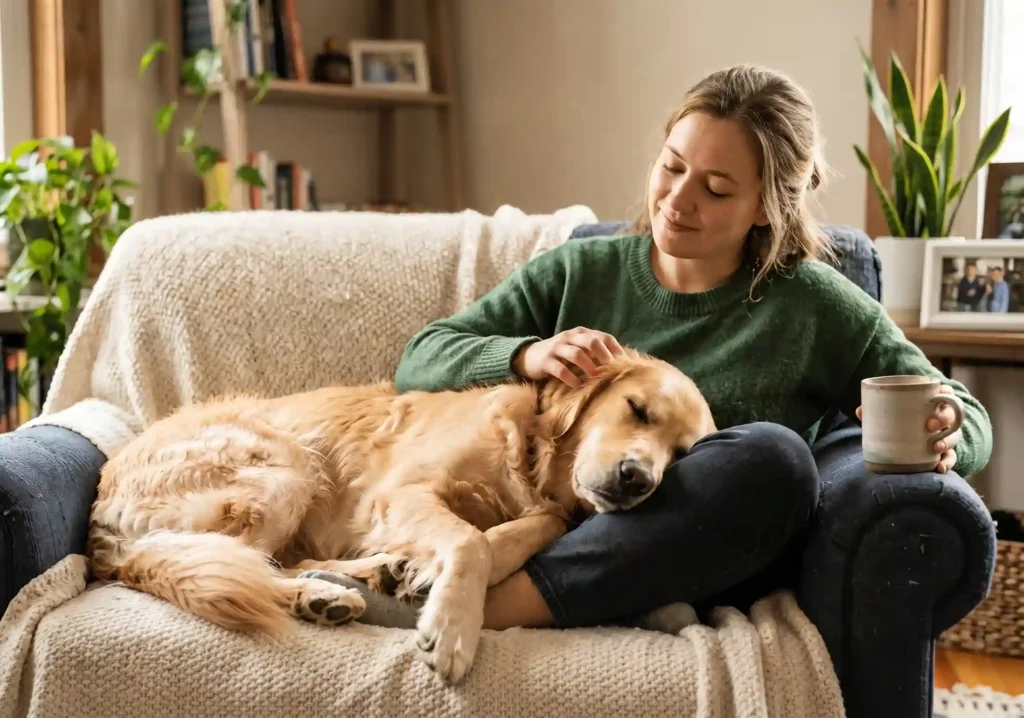

Dogs cannot tell us how they feel with words, but they have plenty of other ways to show affection.
Sometimes it is the excited greeting when you walk through the door. Other times, it is the quiet way your dog chooses to rest beside you, follows you from room to room, or brings you a favorite toy.
These little behaviors can reveal a lot about the relationship you share.
However, every dog has a different personality. Some are naturally cuddly, while others show affection by simply choosing to stay nearby. Understanding your dog’s usual behavior is the best way to recognize those special signs.
Here are 15 heartwarming behaviors that may show your dog feels safe, connected, and comfortable with you.
1. Your Dog Gets Excited When You Come Home
One of the sweetest moments for many dog owners is opening the front door and being greeted by an excited furry friend.
Your dog might wag their tail, bounce around, bring a toy, or rush over to say hello.
Some dogs even make happy little sounds when their favorite person returns.
This enthusiastic greeting can be a sign of social attachment and positive excitement. Your return is an important event in your dog’s day.
Of course, some dogs have calmer personalities and may simply walk over to greet you.
What it may mean: Your dog enjoys your company and has formed a positive connection with you.
2. They Follow You From Room to Room
Does your dog seem to appear wherever you go?
You might walk into the kitchen, and suddenly your furry companion is right behind you. Then you move to the living room, and they follow again.
This behavior can happen because dogs are social animals that often enjoy staying close to their family members.
Your dog may also be curious about what you are doing or simply hoping something interesting is about to happen.
Some dogs follow their owners more closely than others, depending on their temperament and previous experiences.
What it may mean: Your dog enjoys being around you and may feel comfortable having you nearby.
3. Your Dog Makes Soft, Relaxed Eye Contact
A dog looking at you with soft, relaxed eyes can be a lovely sign of connection.
You may notice your dog calmly looking toward you while resting, playing, or waiting for your attention.
Research has found that mutual gaze between dogs and their owners can be associated with oxytocin-related bonding responses.
However, relaxed eye contact is very different from an intense, stiff stare.
A comfortable dog usually has a loose body, relaxed facial muscles, and a natural expression.
What it may mean: Your dog feels comfortable interacting with you and may be seeking social connection.
4. They Lean Against You or Sit Close
Some dogs love physical closeness.
Your dog might gently lean against your legs, sit beside you on the sofa, or rest their body against you while you relax.
This behavior can be a sign of comfort and familiarity.
Dogs sometimes seek physical contact because it feels reassuring, especially when they are resting in a familiar environment.
Not every dog enjoys being touched constantly, though. Some prefer staying close without actually leaning against their owners.
What it may mean: Your dog may enjoy your presence and feel safe enough to relax beside you.
5. They Bring You Their Favorite Toy
When your dog brings you a favorite toy, it can be an invitation to play or interact.
Some dogs carry toys toward their owners when they want attention. Others bring them as part of an enthusiastic greeting.
You may even notice your dog placing a toy in your lap before looking at you expectantly.
It is a wonderful opportunity to strengthen your relationship through play.
However, toy carrying can have different meanings depending on the dog and situation. Some dogs simply enjoy showing off their favorite possession.
What it may mean: Your dog wants to share an enjoyable activity or interact with someone they trust.
6. Your Dog Chooses to Sleep Near You
Dogs spend a considerable part of their day resting, and where they choose to sleep can be interesting.
Your dog might settle beside your bed, curl up near your feet, or choose a comfortable spot close to your favorite chair.
Being near familiar people can provide comfort and security.
Some dogs prefer sleeping independently, while others enjoy being close to their families.
The important thing is whether your dog can relax naturally in that environment.
What it may mean: Your dog may feel comfortable and secure when resting near you.
7. They Check on You When You Feel Upset
Have you ever noticed your dog approaching when you are having a difficult day?
Some dogs respond to changes in their owner’s voice, posture, facial expressions, or activity.
They might come closer, rest their head nearby, or quietly stay beside you.
Research has explored how dogs respond to human emotional cues, and some studies suggest that dogs can distinguish between different human emotional expressions.
However, dogs do not always understand exactly why someone is upset.
Their response may reflect sensitivity to changes in your behavior rather than a human-like understanding of your situation.
What it may mean: Your dog notices changes in your behavior and may respond by seeking contact or staying close.
8. They Gently Lick Your Face or Hands
Some dogs show affection through licking.
Your dog might gently lick your hand when you pet them or give your face a quick lick during a greeting.
Licking is a natural canine behavior that can serve several purposes, including social interaction, exploration, and communication.
It should not automatically be interpreted as a kiss in the human sense.
Some dogs lick because they enjoy the taste of skin, while others have developed the behavior as part of their greeting routine.
What it may mean: Licking can be part of your dog’s familiar social interaction with you.
9. They Get Happy When They Hear Your Voice
Your dog may recognize your voice even when you are in another room.
You might call their name and notice their ears move, their head tilt, or their tail begin to wag.
Some dogs become excited when they hear their owner’s voice on a phone or through a recording.
Dogs can learn to recognize familiar sounds and associate them with particular people, routines, and experiences.
A happy response to your voice may be one of the small ways your dog shows that you are familiar and important to them.
What it may mean: Your voice is a recognizable and meaningful part of your dog’s everyday world.
10. Your Dog Sometimes Shows You Their Belly
A dog lying on their back with their belly exposed can look incredibly adorable.
When your dog does this with a loose, relaxed body, soft eyes, and comfortable movements, they may be feeling safe or inviting interaction.
Some dogs enjoy gentle belly rubs and will happily remain in that position while receiving attention.
But there is an important distinction.
A dog that rolls onto their back with a tense body, tucked tail, flattened ears, or signs of fear may be showing appeasement rather than requesting a belly rub.
What it may mean: In a relaxed context, exposing the belly can be a sign of comfort and trust—but always pay attention to the rest of the body.
11. They Relax Around You
A comfortable dog does not need to remain alert every second.
You may notice your dog stretching out on the floor, resting their head on their paws, or sleeping peacefully while you work or watch television.
Their muscles appear relaxed, their breathing is calm, and they can settle without constantly monitoring everything around them.
Feeling comfortable enough to rest is an important part of a dog’s well-being.
What it may mean: Your dog feels secure in their familiar environment and comfortable with your presence.
12. They Nudge You When They Want Attention
A gentle nose nudge is one of the ways dogs communicate with people.
Your dog might push your hand, touch your leg with their nose, or gently nudge you while you are sitting down.
Sometimes they want petting. Other times, they may be asking for playtime, a walk, or help getting something they need.
Learning what usually happens before and after the nudge can help you understand your dog’s individual communication style.
What it may mean: Your dog has learned that interacting with you is a useful way to communicate their needs.
13. They Come to You When They Feel Scared
When something unfamiliar happens, some dogs look for their trusted people.
A loud noise, unfamiliar visitor, thunderstorm, or unexpected situation may cause your dog to move closer to you.
They might stand beside your legs, seek a familiar resting spot, or look toward you for reassurance.
Providing a calm environment and allowing your dog to choose a comfortable distance can help them feel safer.
Avoid forcing them into situations that frighten them.
What it may mean: Your dog may see you as a familiar source of comfort during uncertain moments.
14. They Match Your Energy and Daily Routine
Dogs can become familiar with their owners’ daily habits.
Your dog may know when it is time for a walk, when you usually prepare food, or when you settle down for the evening.
Some dogs become calmer when their owners are relaxed and more playful when invited to interact.
This does not necessarily mean they understand every human emotion, but dogs are often very attentive to familiar routines and behavioral cues.
What it may mean: Your dog has learned your habits and feels connected to the everyday activities you share.
15. They Look at You With a Soft, Relaxed Expression
Sometimes the sweetest moment is simply looking at your dog and noticing their calm expression.
Their eyes may appear soft, their ears relaxed, and their body comfortably settled.
They might look toward you for a moment before returning to their favorite resting spot.
These small interactions can be meaningful because they happen during ordinary everyday moments.
There is no single facial expression that proves a dog loves someone, but a relaxed dog who voluntarily enjoys spending time with you is showing positive social comfort.
What it may mean: Your dog appears comfortable in your company and enjoys sharing space with you.
Pro Tip: Learn Your Dog’s Personal Love Language
Not every dog expresses affection in the same way.
A Golden Retriever might happily seek cuddles, while another dog may prefer playing, following their owner around, or resting nearby.
Instead of comparing your dog with other pets, pay attention to what makes your individual dog comfortable.
Notice when they voluntarily approach, how they respond to gentle attention, and whether they seem relaxed during everyday interactions.
The strongest relationships develop when affection is mutual and your dog’s boundaries are respected.
Important Note: Love and Stress Can Sometimes Look Similar
Some dog behaviors are easy to misunderstand.
For example, a dog rolling onto their back might be relaxed and asking for a belly rub, or they might be showing fear and trying to avoid conflict.
Similarly, tail wagging does not always mean happiness. Dogs can wag their tails when excited, uncertain, or stressed.
Always look at the whole body, including the eyes, ears, mouth, tail, posture, and the situation.
If your dog’s behavior changes suddenly, particularly alongside changes in appetite, sleep, activity, or social interaction, consult a veterinarian.
Myth vs. Fact: Understanding Your Dog’s Affection
| Myth | Fact |
|---|---|
| A dog that follows you everywhere loves you more than other dogs. | Following can reflect attachment, curiosity, learned habits, or anxiety. |
| Every tail wag means happiness. | Tail movement can communicate several emotional states. |
| Showing the belly always means a dog wants a belly rub. | Some dogs expose their belly when frightened or uncomfortable. |
| Dogs only show affection by licking. | They can show social connection through proximity, play, relaxed behavior, and other interactions. |
| A dog that sleeps alone does not love its owner. | Some dogs simply prefer their own sleeping space. |
| Dogs understand every human emotion. | They can respond to emotional cues, but we should not assume they understand every feeling exactly as humans do. |
Quick Checklist: 15 Possible Signs of a Strong Bond
- Your dog happily greets you.
- They enjoy staying near you.
- They make relaxed eye contact.
- They choose to sit beside you.
- They bring you toys.
- They enjoy resting nearby.
- They approach when you seem upset.
- They sometimes lick your hands.
- They recognize and respond to your voice.
- They relax comfortably around you.
- They gently nudge you for attention.
- They seek comfort when frightened.
- They recognize your daily routines.
- They enjoy spending time with you.
- They appear relaxed and comfortable in your presence.
Frequently Asked Questions
How do I know if my dog loves me?
There is no single behavior that proves affection, but a dog who voluntarily seeks your company, enjoys positive interactions, and appears relaxed around you may have a strong social bond with you.
Does my dog love me if they follow me everywhere?
Following can be a sign that your dog enjoys your company. However, it can also reflect curiosity, routine, or separation-related anxiety. Look at whether your dog remains relaxed when you move away.
Why does my dog sleep next to me?
Your dog may find your presence familiar and comforting. Some dogs enjoy sleeping near their owners, while others prefer their own beds or sleeping areas.
Why does my dog stare into my eyes?
Soft, relaxed eye contact can be part of positive social interaction. However, a prolonged, stiff stare may communicate tension or discomfort. The dog’s overall body language matters.
Does my dog know when I am sad?
Dogs can notice changes in human voices, expressions, posture, and behavior. Some respond by approaching or staying nearby, although this does not necessarily mean they understand the exact reason for your sadness.
Why does my dog bring me their favorite toy?
Your dog may be inviting you to play, greeting you, or seeking attention. Some dogs also enjoy carrying their favorite possessions around familiar people.
Do all dogs show affection in the same way?
No. Personality, breed tendencies, past experiences, and individual preferences can influence how dogs interact with people. A quiet dog can have a strong bond without being especially cuddly.
Conclusion
Dogs have many ways of showing that they feel connected to the people around them.
Sometimes affection looks like an excited greeting or a favorite toy placed in your lap. Other times, it is simply a dog choosing to sleep nearby, follow your daily routine, or relax beside you after a long day.
The most important thing is to understand your dog’s individual personality and respect the ways they prefer to interact.
You do not need a dog that constantly wants cuddles to know you share a special relationship.
Key Takeaway: Your dog’s love may appear in the smallest everyday moments. Pay attention to their comfort, trust, and willingness to spend time with you—that is where the special bond often becomes most visible.