
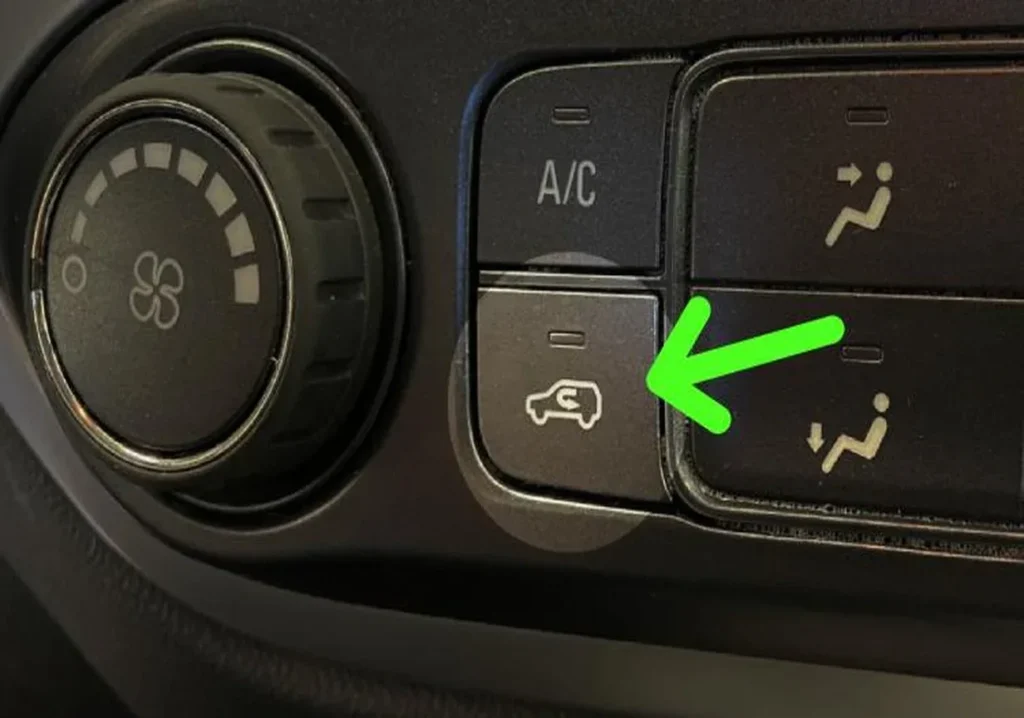

Have you ever noticed a small button on your car’s dashboard showing a car with a curved arrow inside it? Many drivers press it without knowing exactly what it does. This little button can help your air conditioner cool the cabin more efficiently and reduce the amount of unpleasant outside air entering your car.
However, using it at the wrong time can also cause problems, especially when your windows begin to fog up. Understanding when to switch between recirculated air and fresh air can make your drive more comfortable and help you maintain clear visibility.
1. What Does the Air Recirculation Button Do?
The circled button in the picture is the air recirculation button. When you activate it, your car’s climate-control system reuses air already inside the cabin instead of continuously drawing in fresh air from outside.
When you switch to fresh-air mode, the system brings outside air into the vehicle and heats or cools it according to your settings. The exact operation can vary by vehicle, so check your owner’s manual if you are unsure which mode is selected.
2. Use It on Extremely Hot Days
Imagine leaving your car in a sunny parking lot during summer. When you return, the seats, steering wheel, and cabin may feel unbearably hot.
After safely ventilating the hot cabin, turn on the air conditioner and use recirculation mode to help cool the interior more efficiently. Instead of continually bringing in hot outside air, the system can cool air already inside the car.
Once the cabin reaches a comfortable temperature, you can switch to fresh-air mode periodically or follow your vehicle’s automatic climate-control settings.
Helpful tip: Recirculation can improve cooling, but it does not instantly remove all the heat from a sun-soaked car. Never leave children or pets unattended in a hot vehicle.
3. Use It When Outside Air Smells Unpleasant
Have you ever driven behind a smoky vehicle, passed a garbage truck, or entered a tunnel with unpleasant fumes?
Recirculation mode can help reduce the amount of outside air entering your cabin while you pass through the affected area. It is particularly useful when the surrounding air smells smoky or polluted.
Turn the mode off again after the unpleasant conditions have passed so fresh air can enter the vehicle. Remember that recirculation does not make polluted air completely harmless, and it cannot guarantee that all outside contaminants will be blocked.
4. Switch to Fresh Air When Your Windows Fog Up
This is one of the most important situations to understand.
When moisture builds up inside a vehicle, it can condense on the windshield and windows, making it harder to see the road. Keeping recirculation on for too long can contribute to this problem, particularly in cool or damp weather.
If your windows begin to fog:
- Turn off recirculation and select fresh-air mode.
- Use your vehicle’s front windshield defrost or defog setting.
- Turn on the air conditioning if your vehicle’s system supports it.
- Wait until you have a clear view through the windshield and windows before continuing to drive.
Many vehicles automatically select fresh air when the front defroster is activated. Follow your owner’s manual for the correct procedure.
5. Should You Keep Recirculation On During Long Drives?
Not necessarily. Although recirculation can be useful for short periods, it should not automatically be treated as the best setting for every journey.
Vehicle manufacturers generally recommend fresh-air mode for normal ventilation. Prolonged recirculation can allow the cabin air to become stale, and some manufacturers warn that it may contribute to drowsiness or reduced concentration.
For a long road trip, use fresh air as your normal setting when conditions allow. Switch to recirculation temporarily when you need to limit unpleasant outside air or improve cooling.
6. Does the Button Save Fuel?
The answer is more complicated than a simple yes or no.
Recirculation may help the air conditioner cool the cabin more efficiently because the system is reusing air that has already been cooled. However, the actual effect on fuel consumption depends on your vehicle, weather, climate-control settings, and driving conditions.
Do not assume that pressing this button will always reduce fuel use. Its primary purpose is to control the air entering and circulating inside your vehicle.
7. How Can You Tell When It Is On?
Look for the small car-shaped symbol with a curved arrow inside it, similar to the symbol circled in the picture.
Many vehicles have an indicator light that illuminates when recirculation is active. On other vehicles, the setting may appear on a climate-control display. The indicator’s behavior and the way you switch modes can differ by make and model.
If you cannot tell whether your car is using recirculated or fresh air, consult the vehicle’s owner’s manual rather than relying on the symbol alone.
Pro Tip
Use recirculation when you need faster cooling or want to reduce unpleasant outside air entering the cabin. Switch back to fresh air when those conditions pass, and use the defrost setting immediately if your windows begin to fog.
Myth vs. Fact
| Myth | Fact |
|---|---|
| Recirculation should always remain on. | Fresh-air mode is generally recommended for normal ventilation. |
| Recirculation makes the cabin cool instantly. | It can improve cooling efficiency, but the cabin still needs time to cool. |
| Recirculation completely blocks pollution. | It can reduce outside-air intake, but it does not guarantee protection from every pollutant. |
| It is safe to keep recirculation on in every type of weather. | Prolonged use can contribute to window fogging, particularly in cool or damp conditions. |
Quick Checklist: When Should You Use This Button?
- Very hot cabin: Use recirculation with the air conditioner to help cool the interior.
- Smoke or unpleasant outside odors: Use it temporarily to reduce outside-air intake.
- Normal driving: Prefer fresh-air mode when conditions allow.
- Foggy windshield: Switch to fresh air and activate the appropriate defrost setting.
- Long road trips: Avoid relying on recirculation continuously; maintain suitable ventilation.
- Unsure about your car’s controls: Check the owner’s manual for model-specific instructions.
Frequently Asked Questions
1. Should the air recirculation button be on or off while driving?
For normal driving, fresh-air mode is generally a good default. Recirculation is useful when you need better cooling or want to reduce the amount of unpleasant outside air entering the cabin.
2. Can I use recirculation while the air conditioner is on?
Yes. This is a common use for the feature, especially in hot weather. It allows the climate-control system to reuse cabin air and can improve cooling efficiency.
3. Why do my car windows fog up when recirculation is on?
Moisture can build up inside the cabin and condense on cooler glass surfaces. Switching to fresh air and using the defrost setting can help clear the windows.
4. Does recirculation block every outside smell?
No. It can reduce the amount of outside air entering the cabin, but it cannot guarantee that every odor or pollutant will be kept out.
5. Should I use recirculation in winter?
It depends on the conditions. If your windows are clear and you need temporary comfort, it may be useful. If the windshield or side windows begin fogging, switch to fresh air and use the defrost setting.
Conclusion
The small button showing a car with a curved arrow has a simple but useful job: it controls whether your climate system reuses cabin air or brings in fresh air from outside.
Use it to help cool a hot cabin or temporarily reduce unpleasant outside air. For everyday ventilation, fresh-air mode is generally recommended, and if your windows fog up, clear them before driving on.
Key Takeaway: Recirculation is useful when you need it, but it is not a setting you should automatically leave on all the time. Knowing when to switch modes can make your drive more comfortable and help you maintain clear visibility.
Note: Climate-control systems vary by vehicle. Always follow your car manufacturer’s instructions.