
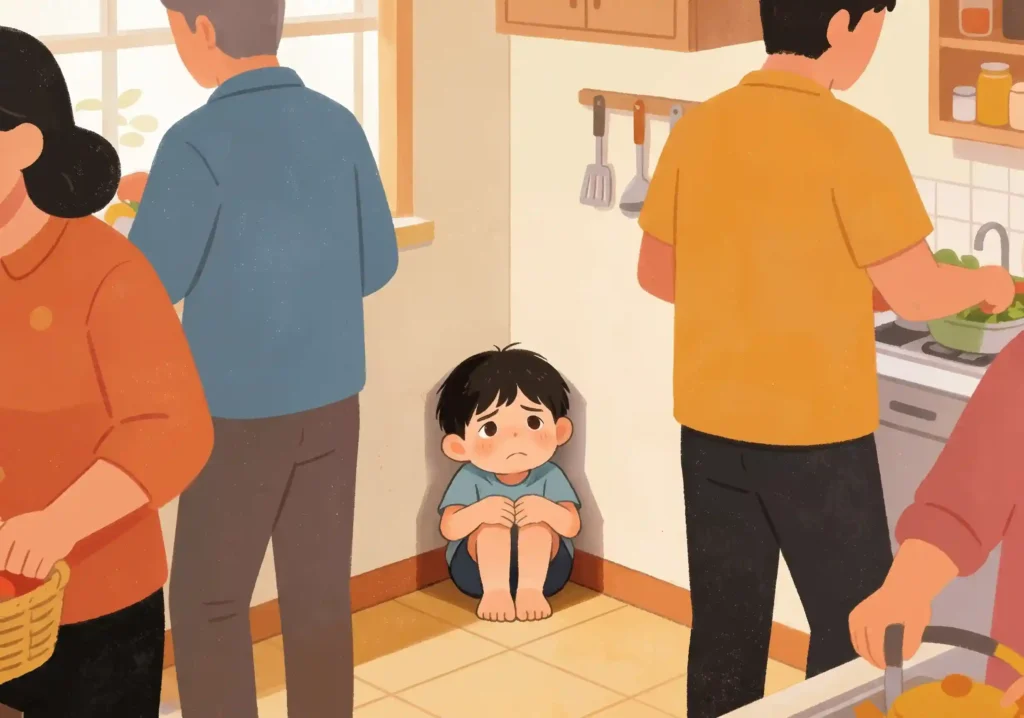

Children may forget the details of many childhood experiences, but the way their parents made them feel can stay with them for years. A harsh comment, a broken promise, or the feeling of never being good enough can sometimes shape how a child sees themselves and their relationships long into adulthood.
Parenting is not easy, and no parent gets everything right. Mistakes happen, emotions run high, and even loving parents sometimes say or do things they later regret. What matters is recognizing when a child’s feelings have been hurt and making a genuine effort to repair the relationship.
Research on parent-child relationships suggests that emotional security, trust, and supportive communication are important to children’s emotional development. That is why certain repeated behaviors can leave a deeper impression than parents realize.
Here are 11 things children may find especially difficult to forgive their parents for—and why understanding these experiences can help families build healthier relationships.
1. Making Them Feel Like They Were Never Good Enough
Children naturally look to their parents for encouragement and reassurance. When a child repeatedly hears that they are lazy, disappointing, incapable, or less talented than someone else, they may begin to believe those judgments.
The damage can be especially painful when a child works hard but receives attention only when something goes wrong. Instead of feeling proud of their progress, they may grow up constantly trying to prove their worth.
Parents can have high expectations without making love or approval feel conditional. Recognizing effort, acknowledging improvement, and correcting mistakes without attacking a child’s character can make a meaningful difference.
A child needs guidance to grow, but they also need to know that a mistake does not make them a disappointment.
2. Comparing Them Constantly With Other Children
“Why can’t you be more like your brother?” or “Your cousin gets better grades than you” may sound like ordinary parental comments. However, repeated comparisons can leave children feeling that they are competing for their parents’ approval.
Every child develops differently. One may excel academically, another may be creative, and another may need more time to develop confidence or social skills.
When parents repeatedly compare siblings or other children, they risk creating resentment and insecurity instead of motivation. A child may even begin to view a brother or sister as a rival rather than someone they can trust.
A healthier approach is to focus on each child’s individual progress. Celebrate their strengths, help them work on areas where they struggle, and avoid using another person’s achievements to shame them.
Children should feel encouraged to become the best version of themselves—not a copy of someone else.
3. Dismissing Their Feelings as Unimportant
A child who says, “I’m scared,” “I’m sad,” or “That hurt my feelings” is often looking for understanding. If the response is always “You’re too sensitive,” “Stop crying,” or “That’s nothing to worry about,” the child may learn to hide their emotions.
Not every fear or frustration needs to determine a family’s decisions. Parents can set boundaries while still acknowledging how their children feel.
For example, a parent might say, “I understand that you’re disappointed, but we still need to leave now.” This recognizes the emotion without changing the decision.
Listening to a child’s feelings also helps parents understand what is happening beneath a behavior. A child who appears angry may actually feel embarrassed, frightened, or left out.
When children learn that their feelings can be discussed without ridicule, they have more opportunities to develop healthy emotional communication.
4. Breaking Promises Over and Over Again
Children often take their parents’ promises seriously. When a parent repeatedly promises to attend a school event, spend time together, or follow through on a special plan but regularly fails to do so, the child may stop believing what they hear.
One canceled outing does not automatically damage a relationship. Emergencies, work demands, illness, and unexpected responsibilities are part of life.
The problem is a repeated pattern in which promises are made casually and broken without explanation or concern for the child’s disappointment.
Parents can build trust by making realistic commitments and following through whenever possible. If a plan must change, explaining why and arranging another opportunity can help the child feel considered.
Trust is built through everyday actions. Keeping a small promise can sometimes mean more to a child than making a grand gesture that never happens.
5. Showing Favoritism Between Siblings
Children pay attention to how their parents treat each family member. If one child consistently receives more affection, praise, opportunities, or forgiveness, another may begin to wonder whether they are less loved.
Favoritism is not always intentional. Parents may find it easier to relate to a child with a similar personality or may give extra attention to a child who needs more support.
Even so, repeated unequal treatment can leave a lasting emotional impression. A child who feels overlooked may withdraw, become resentful, or struggle to feel secure in family relationships.
Fairness does not mean treating every child identically. Different children may need different kinds of support, depending on their ages, personalities, and circumstances.
What matters is that each child feels valued and has a chance to explain when something seems unfair. Parents should listen without immediately dismissing the concern.
6. Using Shame or Humiliation to Correct Their Behavior
Children need rules and consequences, but humiliation is not the same as discipline.
Mocking a child in front of relatives, sharing embarrassing stories to make people laugh, or calling them insulting names can turn a mistake into an experience of shame. The child may remember not only what happened but also the feeling of being exposed or ridiculed by someone they trusted.
Public embarrassment can be especially painful when a child is already struggling with confidence or trying to fit in with their peers.
A more constructive approach is to correct behavior privately whenever possible. Parents can explain why something was wrong, establish an appropriate consequence, and help the child understand how to make a better choice.
Children can learn accountability without being made to feel worthless. Correcting an action while preserving a child’s dignity is an important part of healthy discipline.
7. Being Emotionally Unavailable When They Needed Support
Parents do not have to be cheerful or available every moment of every day. Work, financial pressure, illness, and personal difficulties can make it hard to give children constant attention.
However, when a child repeatedly tries to connect and is met with indifference, rejection, or an unwillingness to listen, they may begin to feel emotionally alone.
Sometimes the missed opportunities are ordinary moments: a child wanting to tell a story, asking for help with a problem, or trying to explain why something at school upset them.
These interactions can matter because children learn about relationships through repeated experiences of being heard, comforted, and taken seriously. Research reviews have linked more secure parent-child attachment with more positive emotional experiences and better emotional regulation.
Parents do not need to solve every problem. Often, putting down the phone, listening carefully, and showing genuine interest can help a child feel supported.
8. Refusing to Admit When They Were Wrong
Children notice when adults make mistakes. They also notice when a parent insists they are always right, even after saying something hurtful or making an unfair decision.
If a parent never apologizes, a child may learn that the more powerful person in a relationship does not have to take responsibility. Over time, this can make honest conversations and reconciliation more difficult.
Apologizing does not mean abandoning parental authority. It means demonstrating that respect and accountability apply to everyone.
A meaningful apology might sound like this: “I was frustrated, but I shouldn’t have spoken to you that way. I’m sorry I hurt your feelings. I’ll try to handle that differently next time.”
Research published in 2025 found that adolescents responded more positively to apologies that acknowledged their hurt than to defensive apologies or no apology.
Parents cannot undo every painful moment, but acknowledging a mistake can help rebuild trust.
9. Controlling Their Choices Without Respecting Their Growing Independence
As children mature, they need opportunities to make decisions, develop preferences, and learn from manageable mistakes. Parents still have responsibilities, particularly when children are young, but control that never adapts to a child’s development can create tension.
For example, constantly deciding what a teenager should study, whom they should befriend, or what interests they should pursue may leave little room for the child to discover who they are.
Some parental guidance is necessary, and not every choice a child makes will be safe or appropriate. The challenge is finding a balance between protection and independence.
Parents can explain their concerns, establish reasonable boundaries, and invite children to participate in decisions that affect them.
As children grow older, respectful discussion can help them develop judgment while preserving the relationship. The goal is not to eliminate parental guidance but to help children gradually become capable of making responsible choices.
10. Making Them Feel Responsible for Adult Problems
Children may sense when something is wrong at home, even when adults try to hide it. Financial stress, relationship conflict, and family disagreements can affect the atmosphere in which they grow up.
The problem becomes more difficult when children are expected to act as messengers between parents, take sides in adult disputes, or provide emotional support that is beyond their developmental capacity.
A child may feel torn between two people they love. They may also believe that keeping the family peaceful is their responsibility.
Parents can be honest about age-appropriate difficulties without sharing every detail. For example, they might explain that the family is facing a challenge but that the adults are working on it together.
Children should know that they can ask questions and express worries. They should not be made to feel responsible for resolving problems that belong to the adults.
11. Making Love and Acceptance Feel Conditional
Perhaps one of the most painful experiences for a child is feeling that parental affection depends on achievement, obedience, or meeting certain expectations.
If warmth disappears whenever a child makes a mistake, disagrees with a parent, or chooses a different path, the child may become afraid of disappointing the family.
They might hide problems, avoid honest conversations, or work excessively hard to earn approval. Others may distance themselves because they feel that being accepted requires pretending to be someone they are not.
Parents can maintain firm boundaries while making it clear that a child’s worth is not defined by grades, career choices, mistakes, or differences of opinion.
This does not mean approving every behavior. It means communicating that a child can be held accountable and still be loved.
A supportive family relationship allows room for disagreement, learning, and growth without making affection feel like a reward that can be withdrawn.
Pro Tip: Repair the Relationship Before Distance Grows
If you recognize one of these patterns in your own parenting, do not assume the relationship is beyond repair. Acknowledging past hurt is a starting point, even if the conversation feels uncomfortable.
Consider these steps:
- Listen without interrupting. Let your child explain how they experienced the situation.
- Acknowledge the specific behavior. Avoid vague statements that do not address what happened.
- Apologize without shifting blame. An explanation can provide context, but it should not erase the child’s feelings.
- Make a realistic commitment. Identify what you will try to change going forward.
- Respect their response. Your child may need time before they feel ready to reconnect.
A sincere apology cannot guarantee immediate forgiveness. It can, however, show that you take the relationship seriously and are willing to make an effort.
Important Note
Not every difficult childhood experience has the same effect on every person. Some children move past painful moments relatively easily, while others continue to struggle with repeated criticism, rejection, or emotional insecurity.
Parents are human, and a single mistake does not define an entire childhood. What matters is the broader pattern, how the child was affected, and whether the family made efforts to address the harm.
If a family relationship involves ongoing abuse, intimidation, or serious emotional distress, support from a qualified mental health professional may help. Reconciliation should not require anyone to ignore their safety or accept continued mistreatment.
Myth vs. Fact
| Myth | Fact |
|---|---|
| Good parents never make mistakes. | Every parent makes mistakes; acknowledging and correcting them matters. |
| Children should simply forget hurtful experiences. | Emotional experiences can affect people differently, and some may need time and support to process them. |
| Apologizing makes a parent look weak. | A sincere apology can model accountability and may help repair trust. |
| Providing food, clothing, and education is enough. | Children also benefit from emotional support, respect, and a sense of security. |
| Parents must agree with every choice to show love. | Parents can set boundaries and disagree while still treating their children with care and dignity. |
Quick Checklist: Are You Building a Relationship Your Child Can Trust?
Ask yourself:
- Do I listen when my child tells me something is bothering them?
- Do I correct mistakes without insulting or humiliating them?
- Do I avoid comparing them with siblings or other children?
- Do I keep my promises or explain honestly when plans change?
- Do I allow age-appropriate independence?
- Can I admit when I have been unfair or hurtful?
- Do I show affection even when my child disappoints me?
- Do I make room for my child’s feelings without automatically dismissing them?
- Do I avoid placing adult responsibilities on my child?
- Do I make an effort to repair our relationship after conflict?
You do not need to answer yes to every question every day. The purpose is to notice patterns and identify small changes that could make family life healthier.
Frequently Asked Questions
1. What do children remember most about their childhood?
Children’s experiences vary, but the emotional atmosphere of home can be important. Feeling supported, respected, and safe may contribute to positive development, while repeated rejection, humiliation, or insecurity may affect how a child views themselves and relationships.
2. Can a child forgive a parent who hurt them?
Yes, some children forgive their parents, while others need more time or choose to maintain distance. Forgiveness is personal and cannot be demanded. A parent’s willingness to acknowledge harm and change their behavior may help, but it does not guarantee reconciliation.
3. Is it too late to apologize for mistakes made years ago?
Not necessarily. A thoughtful apology can still matter years later. Listen to your child’s experience, acknowledge what you did, and avoid pressuring them to forgive you immediately. Lasting repair usually requires consistent behavior, not words alone.
4. Does strict parenting always hurt children?
No. Children need appropriate boundaries, guidance, and predictable expectations. Problems are more likely when discipline relies on humiliation, fear, rejection, or control without regard for the child’s needs and development.
5. Why do some adult children become distant from their parents?
There can be many reasons, including unresolved conflict, different expectations, life circumstances, boundaries, or repeated experiences of feeling misunderstood. Distance does not automatically prove that a parent was harmful or that a child is ungrateful. Understanding the individual situation is important.
6. How can parents rebuild trust with an adult child?
Start by listening, acknowledging past behavior, respecting boundaries, and making realistic changes. Avoid demanding immediate forgiveness or using gifts and favors as substitutes for honest communication. Trust often grows through repeated experiences of reliability and respect.
Conclusion
Children do not need perfect parents. They need parents who are willing to listen, learn, set healthy boundaries, and recognize when their actions have caused pain.
A harsh comment, a broken promise, or a moment of emotional distance does not automatically define a family relationship. But repeated patterns of criticism, humiliation, unfairness, or rejection can create wounds that deserve attention rather than dismissal.
The encouraging part is that relationships can sometimes improve when people take responsibility for their actions and make genuine efforts to understand one another. A sincere apology, a patient conversation, or a change in everyday behavior can be a meaningful beginning.
If you are a parent, remember that it is never a bad time to become more thoughtful about how you treat your child. If you are a son or daughter carrying painful memories, your feelings deserve to be heard too.
Key Takeaway
Children may struggle to move past repeated experiences of rejection, humiliation, broken trust, or conditional love. Parents cannot change every moment from the past, but they can listen, acknowledge harm, and work toward a healthier relationship in the present.