
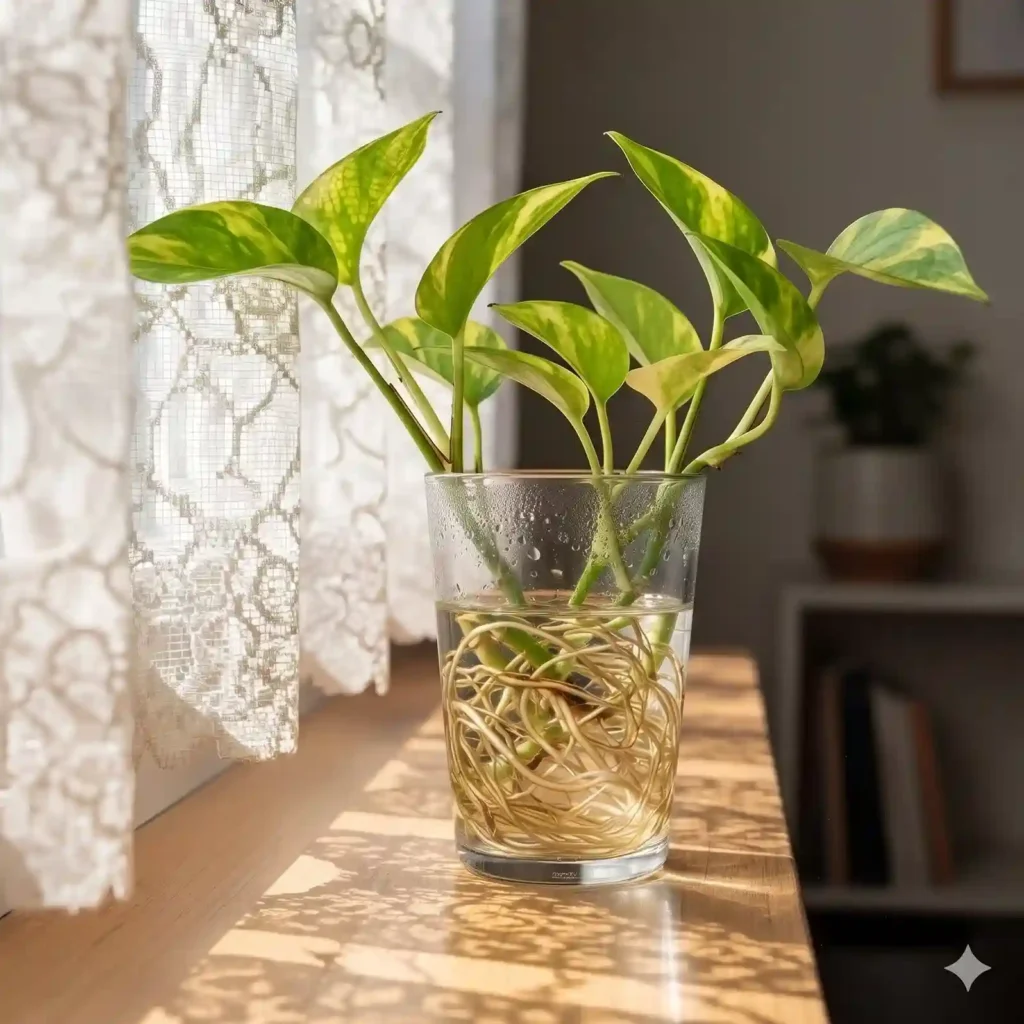

Have you ever wondered why some houseplants grow thick and full while others develop long, bare stems? The secret may be in how you care for them—including where you prune them. A small, well-placed cut can encourage certain plants to develop new side shoots, helping them look fuller and better shaped. Before reaching for your scissors, though, it helps to understand exactly where to cut and which plants benefit from this simple technique.
1. The Secret Is Often Just Above a Leaf Node
A leaf node is the point on a stem where a leaf or bud attaches. It may look like a small joint, bump, or slightly raised area along the stem. Nodes are important because they contain growing points that can produce new shoots or roots, depending on the plant and growing conditions.
When you remove the growing tip of certain houseplants, buds below the cut may begin developing into side branches. This can make the plant appear fuller instead of allowing one stem to keep growing upward or outward. The response varies by species, so a little research before pruning is worthwhile.
2. Why Cutting the Growing Tip Can Make a Plant Bushier
Many plants naturally prioritize growth at the tip of a stem. This process, known as apical dominance, helps the main shoot grow while limiting the development of some side buds.
Removing the growing tip can reduce that dominance, allowing suitable buds below it to grow. The result may be a plant with more branches and a fuller appearance. However, pruning does not guarantee faster overall growth, and a stressed or unhealthy plant may not respond well.
3. How to Find the Right Spot to Cut
Start by examining a healthy stem and locating a node where a leaf attaches. For many branching houseplants, make a clean cut slightly above a suitable node rather than cutting randomly through the middle of a leaf or removing large sections without a plan.
Choose a point that leaves enough healthy foliage on the plant. If you want to shorten several long stems, trim them selectively instead of cutting everything back at once. This helps you maintain the plant’s shape while leaving room for new growth.
4. Which Houseplants May Benefit From This Technique?
Several popular indoor plants can respond well to careful pinching or pruning. Pothos, philodendrons, coleus, and some peperomias may benefit from selective trimming, although the best approach differs between species and varieties.
Trailing plants can be shortened to manage long vines, while naturally branching plants may become denser after their growing tips are removed. Some plants grow from a central crown or have different growth patterns, so cutting them in the wrong place can damage their appearance.
Always identify your plant before making significant cuts. A technique that works beautifully on one houseplant may not be appropriate for another.
5. Use Clean, Sharp Scissors or Pruning Snips
Clean tools help you make neat cuts without crushing or tearing the stem. Before pruning, remove dirt and plant residue from your scissors or snips and follow an appropriate method for sanitizing them.
Make each cut deliberately, avoiding unnecessary damage to nearby leaves and stems. If you are working with several plants, clean your tools between plants, especially when any plant shows signs of disease or pests.
Good pruning technique is not about cutting as much as possible. It is about removing the right growth while protecting the healthy parts of the plant.
6. The Best Time to Prune Most Houseplants
Many houseplants recover and produce new growth most readily when they are actively growing. For many indoor plants, that means spring or summer, although indoor temperatures, lighting, and the plant’s natural growth cycle can affect timing.
Light trimming to remove dead or damaged leaves may be appropriate at other times of the year. However, avoid heavy pruning when a plant is severely stressed, suffering from pests, or struggling with unsuitable watering or lighting.
If you are unsure how a particular species responds, begin with a small trim and observe what happens before making additional cuts.
7. Can You Grow a New Plant From the Cutting?
Sometimes, yes! Pruning can provide an opportunity to propagate additional plants instead of throwing every healthy cutting away.
For suitable species, select a healthy stem cutting that includes at least one or more viable nodes. Remove leaves from the portion that will sit in water or rooting medium, then follow the propagation requirements for that plant.
Some houseplants root readily in water, while others do better in an appropriate potting or propagation medium. Not every leaf or stem cutting will grow into a new plant, so choose a method suited to the species.
8. Avoid These Common Houseplant Pruning Mistakes
One of the biggest mistakes is assuming that every plant needs regular cutting to grow faster. Some plants naturally remain compact, while others grow from a central point that should not be removed casually.
Another mistake is taking off too much foliage at once. Leaves help a plant capture light and produce the energy it needs for growth, so excessive pruning can set it back.
Avoid using dirty or blunt tools, cutting indiscriminately, or expecting immediate results. After pruning, continue providing suitable light, watering, temperature, and drainage for your particular plant.
9. What to Do After You Prune
After trimming, return your plant to a location that provides the light it normally needs. Continue watering according to the plant’s requirements rather than automatically giving it extra water.
Check the cut areas occasionally and watch for signs of healthy new growth. Depending on the species and growing conditions, new shoots may take time to appear.
Remember that pruning is only one part of plant care. Adequate light, healthy roots, suitable soil, and proper watering all contribute to a plant’s ability to produce new leaves and branches.
Pro Tip
If your plant has several long, sparse stems, try selective tip pruning on just a few healthy stems first. Compare their growth with the untouched stems before pruning the rest. This lets you see how your particular plant responds without making a drastic change all at once.
Important Note
Do not remove the main growing point of every plant without identifying the species first. Some plants respond well to pinching, while others have growth patterns that make this technique unsuitable.
Myth vs. Fact
| Myth | Fact |
|---|---|
| Cutting any part of a houseplant makes it grow faster. | The response depends on the species, the location of the cut, and the plant’s health. |
| You should cut off most long stems to make a plant fuller. | Selective pruning is usually a better starting point than removing large amounts of growth. |
| Every cutting will grow into a new plant. | Successful propagation depends on the plant species and the type and condition of the cutting. |
| More water after pruning means faster recovery. | Watering should match the plant’s needs; excess water can harm its roots. |
Quick Checklist Before You Cut
- Identify your houseplant and check whether it responds well to pruning.
- Locate a suitable leaf node or growing tip.
- Use clean, sharp scissors or pruning snips.
- Remove only the amount of growth needed.
- Maintain appropriate light and watering afterward.
- Give the plant time to respond before making more cuts.
Frequently Asked Questions
Where should I cut a houseplant to encourage branching?
For many branching houseplants, a cut just above a suitable leaf node can encourage buds below it to develop into side shoots. The correct technique depends on the plant species.
Will pruning make my houseplant grow faster?
Not necessarily. Pruning may encourage branching or help manage the plant’s shape, but it does not guarantee faster overall growth. Light, water, nutrients, root health, and the plant’s natural growth rate also matter.
Can I prune my houseplant in winter?
You can usually remove dead or damaged growth when necessary, but heavy pruning is often better timed for a period of active growth. Consider the species and the conditions in your home.
Can I put a houseplant cutting in water?
Some plants, including pothos, root readily in water when the cutting includes a suitable node. Other species may require a different propagation method.
Should I prune a sick houseplant?
First identify the problem. Removing dead or diseased material may help in some cases, but a stressed plant may need its watering, lighting, pests, or root conditions addressed before additional pruning.
Conclusion
A small cut in the right place can make a noticeable difference to the shape of some houseplants. By understanding leaf nodes, choosing healthy stems, and pruning selectively, you may encourage new side shoots and create a fuller-looking plant. The most important rule is simple: identify your plant first, use clean tools, and avoid cutting more than necessary.
Key Takeaway
For many branching houseplants, pruning just above a suitable leaf node can encourage fuller growth—but the best results come from using the right technique for the right plant.