
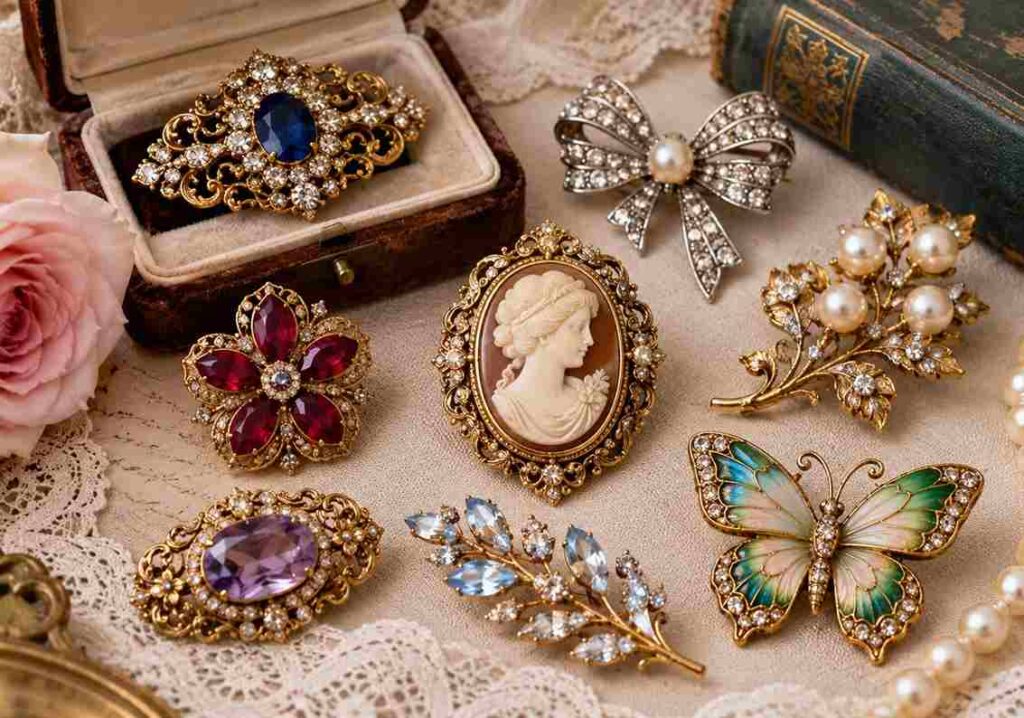

That old brooch sitting inside a jewelry box might be more interesting than you think! Vintage brooches have attracted collectors for generations, especially pieces featuring unusual designs, precious materials, and recognizable makers. Some rare examples have sold for substantial sums, while others are valuable mainly for their beauty and craftsmanship. But how can you tell which pieces deserve a closer look? From intricate Victorian pins to sparkling Art Deco designs, these 15 vintage brooch styles are worth knowing about before you overlook an old family treasure.
1. Victorian Mourning Brooches
Victorian mourning brooches are among the most distinctive pieces of antique jewelry. Many were created to commemorate a loved one and feature dark enamel, intricate goldwork, or sentimental inscriptions. Some examples also contain woven hair beneath glass, making them especially personal historical objects. Collectors may be interested in pieces with documented age, unusual workmanship, and excellent preservation. However, value varies considerably, and not every mourning brooch is rare or expensive. Original materials, condition, provenance, and authenticity all influence how much a collector might pay.
2. Antique Cameo Brooches
Cameo brooches are recognizable by their carved portraits, figures, or classical scenes, often set against a contrasting background. Older examples may feature shell, stone, glass, or other materials, with the finest pieces displaying remarkable carving detail. Some antique cameos were set in gold or surrounded by decorative frames. Collectors often examine the quality of the carving, the material, the setting, and the age of the piece. A beautifully preserved antique cameo from a desirable maker can attract interest, but modern reproductions can look surprisingly similar.
3. Art Deco Diamond Brooches
Art Deco jewelry became popular during the 1920s and 1930s, when geometric patterns and striking combinations of materials defined the style. Brooches from this period may feature diamonds, platinum, contrasting gemstones, and symmetrical shapes. Their precise designs can make them especially appealing to vintage jewelry collectors. Pieces with genuine diamonds, original settings, and documented makers may command significant prices. Still, the Art Deco label alone doesn’t guarantee a high value. Gemstone quality, craftsmanship, condition, and authenticity are all important considerations.
Myth vs. Fact
| Myth | Fact |
|---|---|
| Every antique brooch is worth thousands. | Most pieces are worth much less, depending on materials, rarity, and demand. |
| Old-looking jewelry is always genuinely antique. | Reproductions and later pieces can imitate historical designs. |
| Gold-colored metal means the brooch contains solid gold. | It may be gold-plated, gold-filled, or made from another metal. |
| A famous-looking design guarantees a high price. | Authenticity, condition, maker, and collector demand all affect value. |
4. Signed Designer Brooches
Brooches bearing the signature or maker’s mark of a recognized jewelry designer can be especially interesting to collectors. Depending on the maker, period, and design, signed examples may be more desirable than similar unsigned pieces. The signature is only one part of the evaluation, though. Buyers also consider whether the mark is genuine, whether the piece matches documented designs, and whether it remains in good condition. Before assuming that a signature makes a brooch valuable, have the marking and overall construction examined by someone familiar with the designer’s work.
5. Victorian Gold Filigree Brooches
Filigree jewelry features delicate metalwork arranged into intricate patterns, sometimes resembling lace. Victorian gold filigree brooches can include floral motifs, scrolls, and carefully balanced decorative details. Their appeal often lies in the amount of skilled work required to create such fine designs. Some examples use solid gold, while others contain different metals or gold-plated components. Checking the metal marks and construction can help establish what a piece is made from. Well-preserved examples with attractive designs may interest collectors of antique jewelry.
6. Rare Enamel Flower Brooches
Enamel flower brooches range from delicate antique blossoms to colorful statement pieces created by well-known jewelry makers. Some feature translucent enamel, tiny gold details, or carefully shaped petals that give the design a lifelike appearance. Certain signed or historically important examples can be highly collectible. Condition matters greatly because enamel can chip, crack, or deteriorate over time. A flower brooch with its original finish and an identifiable maker may be more desirable than a similar piece with extensive damage or uncertain origins.
Pro Tip
Before cleaning an old brooch, take clear photographs of the front, back, clasp, and any maker’s marks. Avoid polishing, repainting, or using harsh chemicals until you know what materials you’re dealing with. Antique finishes and delicate enamel can be damaged by aggressive cleaning. If you suspect a piece contains precious metals or valuable gemstones, ask a qualified jewelry appraiser to examine it before making repairs or selling it.
7. Art Nouveau Nature-Inspired Brooches
Art Nouveau jewelry is known for flowing lines, organic shapes, and designs inspired by nature. Brooches from this movement may feature flowers, insects, leaves, or graceful female figures. Some incorporate enamel, pearls, colored glass, or gemstones into highly decorative compositions. Collectors often appreciate examples that demonstrate the movement’s distinctive artistic style. Pieces with documented makers or exceptional craftsmanship may be particularly desirable. However, the style was widely imitated, so identifying an authentic period example requires more than simply recognizing a nature-inspired design.
8. Antique Pearl Brooches
Pearl brooches have appeared in many jewelry styles, from understated gold pins to elaborate pieces featuring multiple pearls and gemstones. Their value depends partly on whether the pearls are natural, cultured, or imitation, as well as their condition and setting. Natural pearls can be particularly important in certain historical pieces, but confirming their identity generally requires professional assessment. A brooch’s age alone doesn’t establish the type of pearl it contains. Original documentation, reputable testing, and careful examination can help determine whether a piece has unusual collector value.
9. Signed Mid-Century Costume Brooches
Not every collectible brooch is made from gold or precious gemstones. Mid-century costume jewelry includes colorful, imaginative designs produced by companies whose work remains popular with collectors. Some pieces feature oversized flowers, sculptural shapes, rhinestones, or distinctive enamel finishes. Recognizable maker’s marks, unusual designs, and excellent condition can increase interest. Certain rare examples from sought-after designers may sell for impressive amounts, while common pieces are usually more affordable. Researching the maker and comparing verified sales can provide a more realistic idea of a brooch’s potential value.
10. Diamond and Platinum Floral Brooches
Fine jewelry brooches made with diamonds and platinum can attract attention because of their materials and detailed construction. Floral examples may feature diamond petals, delicate stems, and carefully arranged settings that allow light to reflect from different angles. Their value depends on the quality and quantity of the diamonds, the platinum content, the workmanship, and the identity of the maker. Older examples may also have historical or design significance. Because genuine precious materials can be expensive, professional evaluation is worthwhile before accepting an offer or listing one for sale.
11. Cameo Glass Brooches
Cameo glass brooches use contrasting layers of glass to create raised designs, sometimes resembling carved stone cameos. Their detailed portraits and decorative patterns can make them visually striking, especially when preserved in an attractive frame. Some examples are associated with historical glassmaking traditions, while others are later interpretations. Collectors may consider the quality of the design, the maker, the condition of the glass, and the originality of the setting. Chips, cracks, and replacement components can affect value, so careful inspection is important before purchasing or selling one.
12. Vintage Rhinestone Statement Brooches
Rhinestone brooches became popular in many periods of fashion, offering sparkle without requiring diamonds. Some feature large floral arrangements, bows, starbursts, or dramatic geometric patterns. Their value depends on factors such as the manufacturer, design, rarity, condition, and current collector demand. Signed examples from recognized costume jewelry makers can be more desirable than generic pieces. Look closely for missing stones, damaged settings, corrosion, and weakened clasps. A well-preserved brooch with an unusual design may attract collectors even when its materials aren’t precious.
13. Antique Cameo and Gold Combination Brooches
Some antique brooches combine carved cameos with elaborate gold frames, creating a contrast between the central portrait and the surrounding metalwork. These pieces may feature twisted borders, floral accents, or decorative details that reflect the fashion of their period. Collectors often look at the quality of the carving and whether the frame appears original to the cameo. Replaced settings or later alterations can influence value. If a brooch appears unusually old or finely crafted, a specialist may be able to identify its materials, approximate period, and possible historical significance.
14. Rare Animal and Insect Brooches
Animal and insect brooches can range from delicate butterflies and dragonflies to sculptural birds and other creatures. Some vintage designs use enamel, colored stones, pearls, or intricate metalwork to create realistic details. Others are deliberately playful or abstract. Collectibility often depends on the maker, the design’s rarity, the materials, and the condition of the piece. Certain signed examples can be sought after, but an unusual subject alone doesn’t guarantee a high price. Identifying the maker and comparing similar pieces can help establish whether a brooch is genuinely scarce.
15. Historically Important or Documented Brooches
Sometimes a brooch’s greatest appeal comes from its history rather than its appearance. Pieces associated with a documented person, a significant event, a recognized collection, or a notable jewelry house may attract specialist interest. Reliable provenance can help establish a connection that ordinary visual inspection cannot prove. However, historical claims need supporting evidence, such as records, original paperwork, or credible expert research. A story passed down through a family can be an interesting starting point, but documentation is important before assigning additional financial value to an object.
Conclusion
Vintage brooches can be beautiful accessories, fascinating historical objects, and occasionally valuable collectibles. From Victorian mourning jewelry and Art Deco diamond designs to signed costume pieces, each style offers different clues about its age, materials, and potential desirability. But remember that a brooch’s appearance alone cannot establish its worth. Authenticity, maker’s marks, condition, rarity, provenance, and actual market demand all matter. If you discover an interesting piece in an old jewelry box, take photographs, research its markings, and seek a professional appraisal before deciding whether to keep it, insure it, or sell it.