
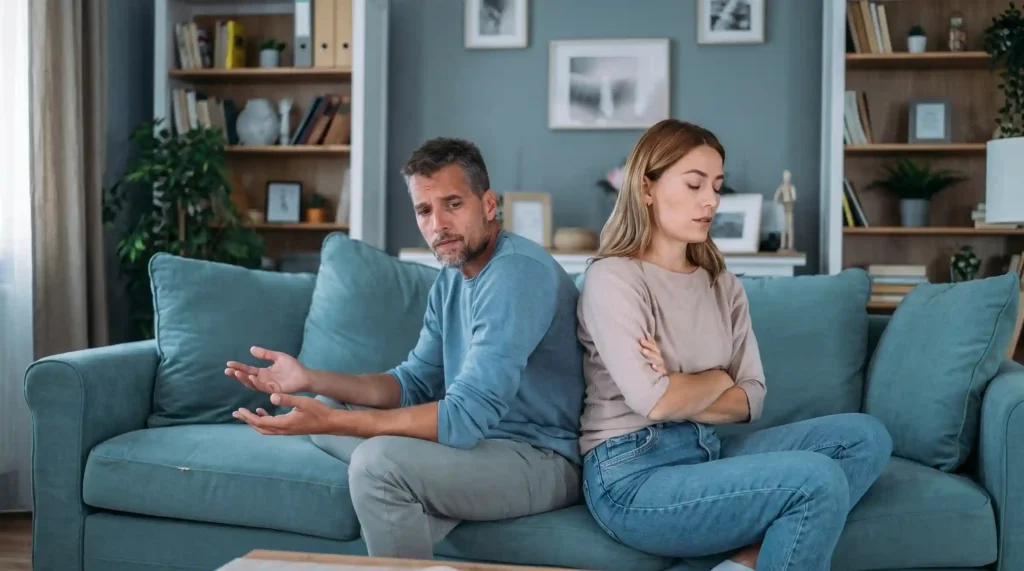

Relationships change over time, and sometimes those changes leave you wondering what is happening beneath the surface. Maybe your husband mentions another woman more often than usual, seems distracted during conversations, or suddenly feels emotionally distant.
It is natural to want answers when something feels different. However, a change in behavior does not automatically mean your husband has a crush on someone else. Work stress, personal worries, and ordinary friendships can also affect how someone behaves.
Here are 10 possible signs to pay attention to, what they might mean, and how to approach the situation without jumping to conclusions.
1. He Mentions the Same Woman Frequently
You may notice that one woman’s name keeps appearing in everyday conversations. He might talk about a coworker’s ideas, mention a friend’s sense of humor, or share stories about someone he knows.
Occasionally mentioning another woman is completely normal. People naturally talk about their coworkers, friends, and acquaintances. The context matters more than the number of times a name comes up.
It may be worth discussing if his interest seems unusually intense or if he frequently brings her into conversations that have little to do with her.
What to consider: Is he simply sharing everyday stories, or does his attention toward this particular person seem to be affecting your relationship? Try to understand the pattern before deciding what it means.
2. He Becomes More Protective of His Phone
Perhaps he once left his phone on the table without thinking about it, but now he seems uncomfortable when you are nearby while he texts.
A noticeable change in phone habits can understandably raise questions, particularly if it appears alongside other changes in your relationship. Secretive messages or deliberately hiding conversations may indicate that someone wants to keep an interaction private.
Still, everyone deserves reasonable privacy. A password, a private conversation, or a preference for personal space is not proof of romantic interest.
What to consider: Focus on specific changes that concern you rather than assuming every private message is suspicious. If you feel that honesty has changed between you, discuss that concern directly instead of secretly checking his accounts.
3. He Seems Emotionally Distant From You
One of the more difficult changes in a relationship is feeling as though your partner is physically present but emotionally somewhere else.
He may ask fewer questions about your day, seem less interested in meaningful conversations, or stop sharing thoughts that he previously discussed with you.
Emotional distance can sometimes accompany an outside romantic attachment, especially if someone begins investing substantial emotional energy in another relationship. However, stress, depression, unresolved disagreements, and exhaustion can also affect emotional closeness.
What to consider: Has the distance developed gradually, or did something specific change? Rather than assuming another woman is responsible, explain how the change affects you and ask what has been happening.
4. He Makes an Unusual Effort to Look Good Around Her
You might notice that your husband pays extra attention to his clothes, hairstyle, fragrance, or appearance before a particular social event.
Sometimes, people put extra effort into their appearance when they want to make a good impression on someone they find attractive. But dressing well can also reflect a new fitness routine, workplace expectations, renewed confidence, or a desire to feel better about oneself.
The important distinction is whether the behavior is part of a broader pattern, not whether he has bought new clothes or started using a different fragrance.
What to consider: Has his appearance changed in a way that concerns you, or are you interpreting an ordinary change as evidence of a crush? One grooming habit cannot tell you what someone feels.
5. He Becomes Unusually Excited When She Contacts Him
You may notice him smiling at a message, laughing during a call, or appearing especially cheerful after interacting with a particular woman.
It can be uncomfortable when your partner seems more animated around someone else than he does at home. In some situations, that excitement may reflect growing attraction or an emotionally important connection.
But people also get excited about friendships, funny conversations, work successes, and good news. A smile at a phone screen does not establish romantic feelings.
What to consider: Look at the overall relationship. Does he still make time for you, show affection, and participate in your shared life? If you consistently feel overlooked, that is worth discussing regardless of who sent the message.
6. He Starts Comparing You to Her
Comparisons can be particularly hurtful because they may leave you feeling that you are competing with someone you never agreed to compete with.
For example, your husband might repeatedly praise another woman’s cooking, communication style, career achievements, or personality while criticizing similar qualities in you.
An occasional comparison does not necessarily indicate a crush. The concern is whether he repeatedly uses another person as a standard against which you are judged or makes you feel inadequate.
What to consider: Pay attention to the effect of these comments. You can explain that comparisons are hurtful without accusing him of having romantic feelings. Respectful communication should allow both partners to express concerns without being belittled.
7. He Shares Personal Matters With Her Instead of You
Emotional closeness often develops through sharing private thoughts, worries, ambitions, and difficult experiences.
If your husband increasingly turns to another woman for emotional support while withdrawing from conversations with you, it may indicate that their relationship has become unusually important to him.
In some circumstances, this kind of closeness can cross boundaries that a couple considers important. In others, it may simply be a friendship or a response to difficulties within the marriage.
What to consider: Ask yourself whether you feel excluded from an important part of his life. If you both value emotional openness, discuss what that means to each of you and how you can rebuild a stronger connection.
8. He Gets Defensive Whenever You Mention Her
You may have noticed that a simple question about this woman quickly turns into an argument. He might become irritated, dismiss your concerns, or insist that there is nothing to discuss.
Defensiveness can sometimes occur when someone feels that an important relationship is being questioned. It can also happen when a person feels unfairly accused, misunderstood, or repeatedly challenged about an innocent friendship.
His reaction alone cannot establish whether he has a crush.
What to consider: Pay attention to whether you can discuss uncomfortable topics respectfully. Instead of starting with an accusation, describe the specific behavior that concerns you and give him an opportunity to explain his perspective.
9. He Makes Less Time for Your Relationship
Perhaps your regular date nights have disappeared, conversations have become shorter, or your husband increasingly prioritizes other activities over time together.
When someone develops a strong outside attachment, they may begin directing more of their attention and energy toward that person. However, busy schedules, parenting responsibilities, work pressure, and unresolved relationship problems can create similar changes.
The key issue is whether the relationship is receiving the attention and care both partners need.
What to consider: Discuss the time you spend together and whether both of you feel valued. You do not need to prove that another woman is involved to ask for more quality time, affection, or shared responsibility.
10. He Seems Secretive About Their Relationship
Friendships become more concerning when a person repeatedly hides important details, deliberately misrepresents interactions, or maintains private communication that violates agreements within the relationship.
For example, there may be a difference between having a normal friendship and repeatedly lying about meetings or concealing the nature of an emotionally intimate connection.
Secrecy can damage trust, but it still does not automatically prove that a romantic or physical affair has occurred. The facts and the couple’s expectations matter.
What to consider: Focus on what you know happened, what was agreed upon, and whether that agreement was broken. You can ask for honesty and discuss boundaries without trying to monitor every conversation or control every friendship.
Pro Tip: Look for Patterns, Not Isolated Moments
A single behavior rarely tells the whole story. Your husband mentioning another woman, changing his hairstyle, or smiling at a message does not establish that he has romantic feelings for her.
What matters more is the broader pattern: whether there is repeated dishonesty, a noticeable loss of emotional connection, or behavior that conflicts with agreements you both consider important.
Separate what you have directly observed from what you suspect. This can help you approach a difficult conversation with greater clarity and less unnecessary conflict.
Important Note: Having a Crush and Cheating Are Not the Same Thing
People may occasionally experience attraction without acting on it. A feeling is different from a decision, and a private attraction is not automatically the same as an affair.
Couples also have different expectations about friendships, privacy, flirting, and emotional intimacy. What matters is whether both partners understand and respect the boundaries they have agreed upon.
If a relationship has become secretive or emotionally damaging, it is reasonable to address the behavior even if you cannot determine exactly what the other person feels.
Myth vs. Fact: Does His Behavior Prove He Likes Someone Else?
| Myth | Fact |
|---|---|
| If he protects his phone, he must be hiding a woman. | Phone privacy alone does not establish romantic interest or dishonesty. |
| If he dresses better, he is trying to impress another woman. | Changes in appearance can have many explanations. |
| If he talks about a woman frequently, he must have a crush. | Frequent mentions may reflect friendship, work, or shared interests. |
| If he becomes defensive, he must be guilty. | Defensiveness can have several causes and is not proof of attraction. |
| A husband who develops a crush will always become emotionally distant. | People respond differently to attraction, and emotional distance has many possible causes. |
| You must prove he has a crush before discussing relationship problems. | You can address specific behaviors and unmet needs without proving his private feelings. |
Quick Checklist: What to Do if Something Feels Different
Before assuming your husband has a secret crush, consider these steps:
- Identify the specific behavior that has changed.
- Separate facts from fears or interpretations.
- Consider reasonable alternative explanations.
- Choose a calm time to talk privately.
- Explain how the situation affects you without making unsupported accusations.
- Discuss boundaries around friendships, honesty, and emotional intimacy.
- Notice whether both of you are willing to listen and work toward a solution.
- Consider couples counseling if communication remains difficult and both partners feel safe participating.
You deserve honesty and respect, but you also deserve clarity rather than having to live with constant suspicion.
Frequently Asked Questions
Can you tell if your husband has a crush on another woman?
There is no single reliable sign that proves someone has a crush. Changes in emotional closeness, secrecy, or repeated boundary violations may justify a conversation, but none independently confirms romantic attraction.
Is it normal for a married man to find another woman attractive?
People can notice attraction even when they are in committed relationships. What matters is how they handle those feelings and whether their behavior respects the agreements and boundaries of their relationship.
Does hiding text messages mean he is emotionally cheating?
Not necessarily. Privacy has many legitimate explanations. However, repeated deception about an emotionally intimate relationship may raise questions about trust and boundaries.
What should I do if I suspect my husband likes someone else?
Start by identifying the specific behavior that concerns you. Talk about what you have observed, how it makes you feel, and what you need from the relationship. Avoid treating assumptions as facts or secretly monitoring his private accounts.
Can a marriage recover if one partner develops feelings for someone else?
It may be possible, depending on the circumstances and whether both partners are willing to communicate honestly, respect boundaries, and rebuild trust. Couples counseling can provide support when conversations repeatedly become difficult.
Should I confront the other woman?
Usually, the most useful first step is to speak with your husband about the behavior and agreements that affect your relationship. Contacting the other woman may create additional conflict without answering your central questions.
Conclusion
Noticing changes in your husband’s behavior can bring up difficult questions, especially when another woman seems to be receiving more of his attention. It is understandable to want clarity when your relationship no longer feels the way it once did.
Still, no checklist can reveal another person’s private feelings with certainty. The most meaningful concerns are patterns of dishonesty, emotional withdrawal, broken agreements, and a lack of respect for one another’s boundaries.
You do not need to jump to conclusions to take your feelings seriously. Start with an honest conversation about what you have noticed, what you need, and how you both want to protect your relationship.
Key Takeaway: Possible signs of a crush are reasons to seek clarity, not proof of betrayal. Focus on observable behavior, honest communication, and the boundaries that help both partners feel respected.