
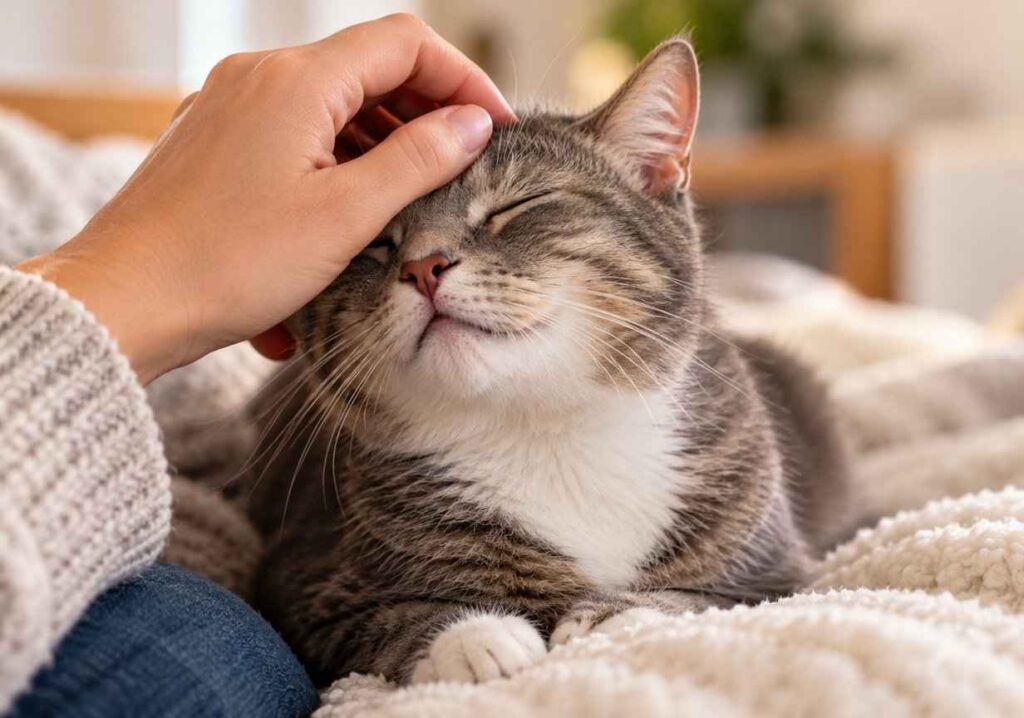

Have you ever heard that rubbing your cat’s forehead is something you should never do? If so, you might be surprised to learn that gentle forehead petting is actually something many cats enjoy. Cats communicate through their body language, facial expressions, and even the way they approach your hand. Understanding these small signals can help you build a stronger bond with your furry friend. Before changing the way you pet your cat, here are nine things every cat owner should know.
1. Most Cats Enjoy Gentle Forehead Rubs
If your cat pushes its head against your hand when you reach out, it may be inviting you to give it some attention. Many cats enjoy gentle strokes across the forehead, especially between the ears. This area can be a comfortable place for familiar, gentle contact. However, every cat has individual preferences, and some may prefer cheek scratches or chin rubs instead. The best approach is to let your cat guide the interaction rather than assuming every cat enjoys the same kind of touch.
2. Cats Use Head Bunting to Show Familiarity
Have you noticed your cat gently bumping its head against your hand, leg, or face? This behavior is often called head bunting. Cats have scent glands around their cheeks and other parts of their heads, and rubbing against familiar people can help them exchange scents. It can be a sign of social bonding and familiarity. When your cat approaches you this way, it may be inviting interaction. Still, a head bump doesn’t mean your cat wants unlimited petting, so pay attention to what happens next.
3. Your Cat’s Body Language Matters More Than the Spot You Touch
The most important thing isn’t whether you touch your cat’s forehead, cheeks, or chin. It’s how your cat responds. A relaxed cat may lean into your hand, keep its ears in a neutral position, and remain comfortably near you. A cat that turns away, flattens its ears, flicks its tail sharply, or tries to move away may be uncomfortable or overstimulated. Stop petting when you notice these signals and give your cat space. Learning these small clues can help prevent unwanted handling and make affectionate moments more enjoyable.
Myth vs. Fact
| Myth | Fact |
|---|---|
| You should never rub a cat’s forehead. | Many cats enjoy gentle forehead petting when they feel comfortable. |
| Every cat likes being petted in the same places. | Cats have individual preferences and boundaries. |
| A cat that stays still always enjoys being touched. | Some cats freeze or tolerate handling without actually enjoying it. |
| Purring always means a cat is happy. | Purring can happen in different situations, so consider the cat’s overall body language. |
4. The Cheeks and Chin May Be Better Favorites
Some cats prefer gentle scratches around their cheeks and underneath their chin rather than strokes directly across the forehead. These areas contain scent glands and are involved in familiar social behaviors. If your cat seems uncertain when you touch its head, try offering a finger near its cheek and allow it to approach. Avoid pushing your hand toward its face. Letting your cat initiate contact gives it more control and can make the experience less stressful.
5. Some Cats Need Time to Trust Human Touch
Not every cat grows up enjoying hands near its face. Cats that have had limited positive handling experiences may be cautious, especially around unfamiliar people. Rescue cats, newly adopted kittens, and naturally shy cats may need extra time to become comfortable. Start with brief interactions and let the cat decide whether to come closer. Never force a cat to accept forehead rubs simply because another cat enjoys them. Patience and consistent, gentle handling can help build trust over time.
6. Too Much Petting Can Make a Cat Uncomfortable
Even a cat that enjoys forehead rubs can become overstimulated if petting continues for too long. You might notice its skin twitching, its tail swishing, its ears turning sideways, or its head suddenly turning toward your hand. These signs can mean the cat needs a break. Some cats give subtle warnings before moving away or swatting, so don’t wait for a stronger reaction. Pause regularly during petting and see whether your cat chooses to lean back in for more attention.
Pro Tip
Try the simple three-second test: gently pet your cat for a few seconds, then pause and remove your hand. If your cat leans toward you, nudges your hand, or clearly seeks more contact, you can continue gently. If it turns away or remains uninterested, let it have a break. This isn’t a perfect test for every cat, but it gives your pet a chance to choose whether the interaction continues.
7. Never Force Your Cat to Accept Head Rubs
It’s tempting to keep petting a cat because it looks adorable or seems calm. However, holding a cat in place or repeatedly touching its head when it tries to move away can create stress. Allow your cat to leave whenever it wants. If you’re introducing a new cat to your household, keep interactions short and positive. Children should also learn to approach cats calmly and avoid grabbing their heads, ears, or whiskers. Respecting boundaries helps cats feel safer around people.
8. Watch for Signs That Forehead Touching Hurts
There is a difference between a cat that dislikes petting and a cat that experiences pain. If your cat suddenly starts avoiding head contact, cries when touched, pulls away repeatedly, or reacts aggressively to gentle strokes, pay attention. Swelling, wounds, unusual discharge, or changes in eating and grooming can also indicate a problem. A veterinarian should assess persistent discomfort or sudden behavioral changes. Don’t assume that every negative reaction is simply your cat being moody.
9. Let Your Cat Decide How It Wants to Be Petted
Building trust often comes down to small choices. Offer your hand calmly, let your cat approach, and begin with gentle strokes in areas it already seems to enjoy. Pay attention to its ears, tail, posture, and willingness to stay close. Some cats will happily push their heads into your palm, while others prefer sitting beside you without being touched. Both behaviors are normal. Respecting these differences helps you understand your pet as an individual rather than expecting it to behave like every other cat.
Conclusion
So, should you really never rub your cat’s forehead? No. Gentle forehead petting is perfectly acceptable for many cats, provided they enjoy it and show no signs of discomfort. The important lesson is to pay attention to your cat rather than following a blanket rule. Let your furry friend initiate contact, keep petting sessions gentle, and stop when it wants space. By understanding your cat’s body language, you can make everyday moments of affection more comfortable and strengthen the bond you share.