
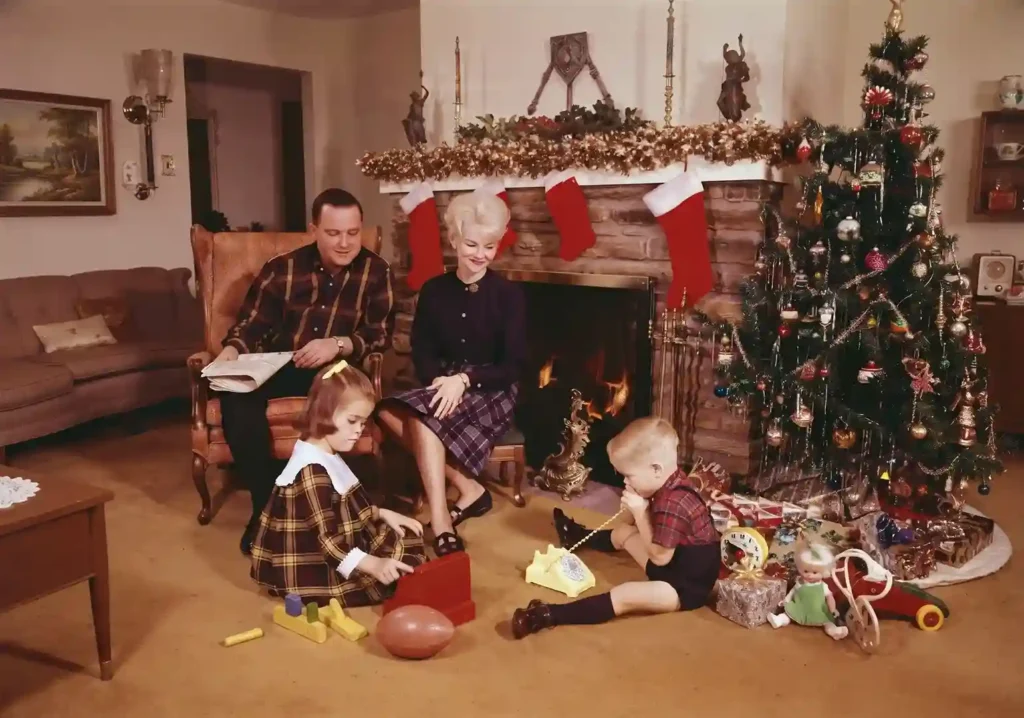

Christmas in the 1960s and 1970s had a special kind of atmosphere. Living rooms filled with colorful decorations, families gathered around television sets, children waited impatiently for Christmas morning, and handwritten cards traveled through the mail.
Some homes had shiny aluminum trees, others displayed handmade ornaments, and many families followed traditions that were repeated year after year.
Today, some of those customs have almost disappeared, while others have changed with technology, shopping habits, and modern lifestyles.
Let’s revisit 35 Christmas rituals from the 1960s and 1970s that older generations may remember—and discover what happened to them.
1. Decorating With Shiny Aluminum Christmas Trees
One of the most recognizable Christmas decorations of the 1960s was the aluminum Christmas tree.
These unusual silver trees had reflective branches that created a futuristic look inside the living room. They became especially popular during the mid-1960s, with the Evergleam brand among the best-known examples.
Many families paired them with colorful ornaments and special lighting equipment.
What happened? Natural-looking trees gradually became more popular, and aluminum trees became vintage collectibles rather than everyday decorations.
2. Using a Rotating Color Wheel to Light the Tree
An aluminum tree was not decorated with ordinary strings of lights.
Instead, many families placed a rotating color wheel near the base. Its changing colors reflected against the metallic branches, creating a dramatic holiday display.
The moving colors were part of the attraction, making the tree look different from traditional evergreen decorations.
What happened? As aluminum trees lost popularity, color wheels became less common. Today, collectors and vintage Christmas enthusiasts still appreciate them.
3. Hanging Tinsel One Strand at a Time
Decorating the Christmas tree could take a surprisingly long time.
Instead of simply throwing tinsel over the branches, some families carefully placed individual strands to create a shimmering effect.
Children sometimes helped with this task, although getting the strands evenly distributed could become a family debate.
What happened? Modern garlands and easier-to-use decorations made the process quicker. Traditional loose tinsel is still available, but it is no longer a universal decorating ritual.
4. Making Paper Chains at Home
Colorful paper chains were a simple way to decorate living rooms during the holidays.
Families cut strips of colored paper, formed them into loops, and connected each new strip to the previous one. Children often helped make long chains to hang across walls, doorways, and Christmas trees.
The decorations were inexpensive, personal, and fun to create together.
What happened? Ready-made decorations became easier to purchase, but paper chains remain a popular classroom and family craft.
5. Making Popcorn and Cranberry Garlands
Before every decoration came from a store, families sometimes used food to decorate their Christmas trees.
Popcorn was threaded onto strings, sometimes alternating with cranberries to create colorful garlands.
Children could spend an afternoon helping with the project, although plenty of popcorn mysteriously disappeared before the decoration was finished.
What happened? Store-bought garlands and artificial decorations became more convenient. However, homemade popcorn and cranberry strings are still used by families who enjoy traditional crafts.
6. Making Homemade Christmas Ornaments
Handmade ornaments were especially meaningful in families that enjoyed crafting.
People used paper, fabric, wood, felt, ribbons, and other materials to create decorations that reflected their personalities.
Some ornaments were made by children at school, while others became family keepsakes that returned to the tree every December.
What happened? Mass-produced decorations became widely available, but handmade ornaments experienced renewed popularity during the 1970s craft revival.
7. Decorating With Homemade Macramé
The 1970s brought a strong interest in handmade crafts and natural-looking decorations.
Macramé, a knotting technique used to create decorative objects, found its way into some holiday decorating styles.
Families interested in handmade décor sometimes created macramé ornaments and alternative Christmas decorations.
What happened? Decorating trends changed over the decades, but macramé has returned several times as a popular craft and home décor style.
8. Placing a Toy Train Around the Christmas Tree
A small electric train circling the Christmas tree could become one of the most exciting parts of a family’s holiday display.
Children enjoyed watching the train move around the presents, while adults often helped set up the tracks and keep everything running.
For some households, the train was a treasured decoration brought out every December.
What happened? Toy trains never disappeared completely, but they became more of a collector’s or hobbyist tradition than a standard Christmas decoration.
9. Decorating With Bubble Lights
Bubble lights were another memorable feature of mid-century Christmas decorations.
These special bulbs contained liquid that bubbled as it warmed, creating a moving display of colorful light.
Their unusual appearance made them stand out from ordinary Christmas bulbs.
What happened? New lighting styles became more common, but bubble lights remain available and are still loved by vintage decoration collectors.
10. Displaying a Christmas Nativity Scene
Many families placed a nativity scene beneath the Christmas tree or on a table in the living room.
Some sets were purchased, while others were handmade or passed down through generations.
For religious households, arranging the figures could be an important part of preparing for Christmas.
What happened? Nativity displays remain common in many homes and churches, although their size and style vary considerably.
11. Sending Christmas Cards Through the Mail
Christmas cards were once an important way to stay connected with relatives, friends, and neighbors.
Families often bought packs of cards, wrote personal messages, added their signatures, and mailed them weeks before Christmas.
Receiving a card from someone far away could feel especially meaningful.
What happened? Email, messaging apps, and digital greetings have replaced some traditional cards. Printed cards are still popular, particularly for family photographs and personal messages.
12. Writing Long Personal Messages Inside Cards
A Christmas card was not always just a quick greeting.
People sometimes wrote several lines about their family, children, travels, and important events from the year.
These messages helped relatives stay updated, especially when they lived far apart.
What happened? Short digital greetings became more common, but handwritten messages remain a thoughtful tradition for people who enjoy personal correspondence.
13. Visiting Department Stores to See Christmas Displays
For many families, visiting a department store during December was part of the Christmas experience.
Large windows featured elaborate displays, festive decorations, toy scenes, and holiday characters.
Children could spend a long time looking at the displays while parents completed their shopping.
What happened? Online shopping and changing retail habits reduced the role of traditional department-store Christmas visits, although some famous holiday window displays continue to attract crowds.
14. Visiting Santa at the Local Department Store
A visit to Santa was often a major event for young children.
Families dressed their children in special outfits, waited in line, and took photographs with Santa.
Children were sometimes asked what they wanted for Christmas, making the visit feel like an important step toward the big day.
What happened? Santa visits still exist, but shopping centers, seasonal events, and digital photo experiences have expanded the tradition.
15. Browsing Giant Christmas Toy Catalogs
Before online wish lists, children often looked through printed toy catalogs.
They circled toys, showed their favorites to parents, and imagined what might appear under the tree.
For some children, browsing the catalog was almost as exciting as opening the presents.
What happened? Websites, apps, and digital wish lists have largely replaced printed catalogs, although some families still enjoy looking through physical toy books.
16. Shopping for Gifts in Busy Downtown Stores
Holiday shopping often meant visiting crowded shopping streets and department stores.
Families walked between shops, compared prices, searched for toys, and carried bags through decorated downtown areas.
Shopping could become a full-day activity rather than something completed from a phone or computer.
What happened? Shopping malls, big-box stores, and online retailers transformed the experience. Some downtown shopping traditions remain alive in historic city centers.
17. Wrapping Every Gift by Hand
Gift wrapping was an activity in itself.
Families used rolls of colorful paper, ribbons, bows, and gift tags. Some people took great care to make every package look beautiful.
Children often tried to guess what was inside based on the shape and size of the wrapped present.
What happened? Gift bags and ready-made packaging made wrapping quicker, although traditional wrapping remains popular.
18. Reusing Gift Ribbons and Wrapping Paper
Some families carefully saved ribbons, bows, and pieces of wrapping paper after opening gifts.
The materials were folded, stored, and brought out again the following Christmas.
It was a practical habit, particularly when decorative supplies were considered something worth saving.
What happened? Disposable gift packaging became more common, but reusable ribbons and recycled wrapping materials are enjoying renewed interest among people trying to reduce waste.
19. Opening Presents One at a Time
Christmas morning could be a slow and exciting experience.
Instead of opening every gift immediately, some families took turns, allowing everyone to see what each person received.
This created more opportunities to talk, laugh, and enjoy the reactions.
What happened? Many families still follow this tradition, although others prefer opening presents all at once.
20. Hanging Stockings Before Christmas Eve
Children often hung stockings near the fireplace, along a wall, or beside the Christmas tree.
The stockings were expected to receive small gifts, candy, fruit, and other surprises.
For many families, preparing the stockings became part of the excitement before bedtime.
What happened? Stockings remain a familiar Christmas custom, although modern families often use personalized designs and different locations.
21. Making Christmas Cookies Together
Baking was an important part of holiday preparation in many households.
Families prepared sugar cookies, gingerbread, shortbread, and other seasonal treats.
Children sometimes helped mix ingredients, cut out shapes, or decorate cookies with icing and sprinkles.
What happened? Homemade holiday baking is still popular, although ready-made treats and store-bought cookie dough have made preparation easier.
22. Preparing Fruitcake Weeks Before Christmas
Some families began preparing their Christmas fruitcakes well before the holiday.
These cakes often contained dried fruit, nuts, spices, and other ingredients. Certain traditional recipes were prepared in advance to allow the flavors to develop.
The fruitcake became a familiar seasonal gift and dessert.
What happened? Fruitcake remains a holiday tradition for some families, but its popularity varies, and many households now choose other desserts.
23. Making Homemade Christmas Candy
Holiday candy-making could turn the kitchen into a busy family workspace.
People prepared fudge, peanut brittle, peppermint treats, caramel, and other sweets to share with relatives or give as gifts.
Some recipes were passed from grandparents to younger generations.
What happened? Commercial candy became easier to buy, but homemade holiday sweets remain a popular tradition.
24. Preparing a Large Family Christmas Dinner
Christmas dinner was often a major family gathering.
Depending on family background and regional customs, the meal might include turkey, ham, potatoes, vegetables, gravy, rolls, and special desserts.
Preparing the food could involve several family members working together.
What happened? Family Christmas dinners remain important, although smaller households, different diets, and changing schedules have influenced modern menus.
25. Serving Christmas Punch From a Large Bowl
Holiday punch bowls were familiar features at many family gatherings.
Hosts prepared colorful drinks for guests and served them from a large bowl or pitcher.
The punch might contain fruit juice, soda, citrus, or other ingredients, depending on the family’s recipe.
What happened? Individual drinks and simpler serving arrangements became more common, but punch remains popular at holiday parties.
26. Visiting Relatives on Christmas Day
Christmas often meant traveling between relatives’ homes.
Families might visit grandparents, aunts, uncles, cousins, and other loved ones throughout the holiday.
For children, these visits meant seeing relatives they might not meet regularly during the year.
What happened? The tradition continues, but travel costs, distance, work schedules, and smaller family gatherings have changed how people organize visits.
27. Making Long-Distance Christmas Phone Calls
A phone call from a distant relative could be one of the most anticipated parts of the holiday.
Before video calls and instant messaging, families used landlines to exchange Christmas greetings.
Some people planned calls carefully because international or long-distance conversations could be expensive.
What happened? Smartphones, video calls, and messaging apps made staying connected easier, but a traditional Christmas phone call can still feel special.
28. Going Door-to-Door Christmas Caroling
Groups of neighbors, children, and church members sometimes walked through their communities singing Christmas carols.
The singers visited homes, spread holiday cheer, and enjoyed the experience together.
In some places, caroling was also organized through schools or religious communities.
What happened? Caroling remains alive in certain neighborhoods and churches, but it is less common in many communities than it once was.
29. Singing Christmas Songs Around the Piano
Some households gathered around a piano to sing familiar Christmas songs.
Family members took turns playing, singing, or joining in with the chorus.
It was an opportunity for different generations to share music without needing a television or digital playlist.
What happened? Recorded music and streaming services have changed how families enjoy holiday songs, although piano sing-alongs still happen in many homes.
30. Listening to Christmas Records
Before streaming services, families often played Christmas music using vinyl records.
Albums featuring holiday classics became part of the seasonal atmosphere.
Some households had favorite records that were played repeatedly every December.
What happened? CDs, digital downloads, and streaming replaced much of the vinyl listening experience. Vintage Christmas records, however, remain popular among collectors.
31. Watching Christmas Specials at a Scheduled Time
Television had a special place in many Christmas celebrations.
Families gathered around the TV to watch seasonal movies, animated specials, and holiday programs.
Because many shows aired at specific times, people sometimes planned their evenings around them.
What happened? Streaming services and on-demand viewing made holiday entertainment available whenever people wanted, changing the shared experience of waiting for a scheduled broadcast.
32. Taking Christmas Family Photographs With Film Cameras
Family photographs were often taken using film cameras.
Parents carefully arranged everyone around the tree, asked children to smile, and hoped the photograph turned out well.
There was no immediate preview, so families sometimes waited days or weeks before seeing the finished pictures.
What happened? Digital cameras and smartphones made taking and sharing photographs much easier. Printed family albums remain meaningful, though.
33. Recording Christmas Morning on Home Movies
Some families used home movie cameras to record Christmas morning.
The footage might show children opening presents, relatives laughing, and everyone gathered around the tree.
Unlike modern videos, these recordings were often short and carefully saved for future viewing.
What happened? Smartphones replaced many traditional home movie cameras, but old family films remain valuable pieces of personal history.
34. Decorating the House With Handmade Outdoor Displays
Some families created their own outdoor Christmas decorations using lights, wooden figures, handmade signs, and simple illuminated displays.
Neighbors could enjoy seeing each other’s decorations during evening walks or drives.
For children, looking at decorated homes was part of the holiday excitement.
What happened? Modern outdoor decorations became more varied and technologically advanced, with inflatable figures, LED lights, and synchronized displays.
35. Spending Christmas Evening Simply Being Together
Perhaps the most meaningful tradition was also the simplest.
After the presents had been opened and dinner was finished, families often spent the evening talking, watching television, playing games, or relaxing together.
There was no need for a complicated schedule. The important part was having time with the people who mattered.
What happened? Busy schedules and digital distractions have changed how families spend their time, but the desire to slow down and enjoy one another remains at the heart of many Christmas celebrations.
Pro Tip: Bring One Old Christmas Tradition Back This Year
You do not have to recreate an entire 1960s living room to enjoy a little vintage Christmas magic.
Choose one simple activity: make paper chains with the children, bake cookies from an old family recipe, send handwritten cards, or play a favorite Christmas record.
Sometimes, one familiar tradition can make the holiday feel more personal.
Important Note: Not Every Family Celebrated Christmas the Same Way
These traditions reflect a collection of American and British holiday customs from different communities and households. They were not universal, and some were more popular in particular regions or decades.
Many also continue today. Some simply became less common as technology, shopping habits, and decorating styles changed.
The goal is not to suggest that Christmas was perfect in the past, but to appreciate the small rituals that created memories for many families.
Myth vs. Fact: Christmas Traditions of the 1960s and 1970s
| Myth | Fact |
|---|---|
| Every family had an aluminum Christmas tree. | These trees were a popular trend, but many families continued using traditional evergreens. |
| Handmade decorations disappeared completely. | Homemade crafts remained popular, particularly during the 1970s. |
| Families no longer send Christmas cards. | Printed cards are still sent, although digital greetings have become more common. |
| Vintage Christmas decorations are no longer available. | Many vintage decorations are still collected, sold, and displayed today. |
| Families always celebrated Christmas in the same way. | Traditions varied according to region, religion, culture, and household preferences. |
Quick Checklist: 10 Vintage Christmas Traditions to Try Again
- Make colorful paper chains.
- Create handmade Christmas ornaments.
- Bake cookies with family members.
- Send handwritten Christmas cards.
- Play classic holiday records.
- Make popcorn garlands.
- Decorate a small Christmas tree together.
- Take a printed family photograph.
- Watch a favorite Christmas movie together.
- Spend an evening without phones or distractions.
Frequently Asked Questions
What was the most popular Christmas tree style in the 1960s?
Aluminum Christmas trees became a major decorating trend during the 1960s. Their reflective branches and rotating color wheels gave homes a distinctive futuristic appearance.
Why did aluminum Christmas trees disappear?
Natural-looking trees and handmade decorations became more popular during the following decade. The aluminum tree trend gradually faded, although vintage versions are now collectible.
What Christmas decorations were popular in the 1970s?
Many households used handmade ornaments, natural-looking decorations, macramé crafts, colorful lights, and traditional evergreen trees. Decorating styles varied from family to family.
Did families really make their own Christmas decorations?
Yes. Paper chains, handmade ornaments, popcorn garlands, and other simple crafts were part of holiday decorating in many households.
Why were Christmas traditions different before the internet?
Families relied more heavily on physical stores, printed catalogs, mailed cards, landline phones, broadcast television, and in-person gatherings. These activities naturally shaped how people prepared for and celebrated Christmas.
Are vintage Christmas decorations worth collecting?
Some vintage decorations, including aluminum trees, bubble lights, and older ornaments, attract collectors. Their value depends on condition, rarity, brand, and demand.
Conclusion
Christmas in the 1960s and 1970s looked different from the celebrations many families enjoy today. Aluminum trees, handmade decorations, paper cards, department-store visits, Christmas records, and scheduled television specials all helped create the holiday atmosphere of those decades.
Some of these traditions faded, others evolved, and quite a few are still enjoyed by families who appreciate the nostalgia.
But perhaps the biggest lesson from those old Christmas rituals is that the most memorable moments were not always about expensive gifts or perfect decorations.
They were about spending time together, creating something by hand, sharing familiar meals, and making memories that lasted long after the holiday ended.
Key Takeaway: Christmas traditions may change with every generation, but the joy of family, simple celebrations, and shared memories never really goes out of style.