
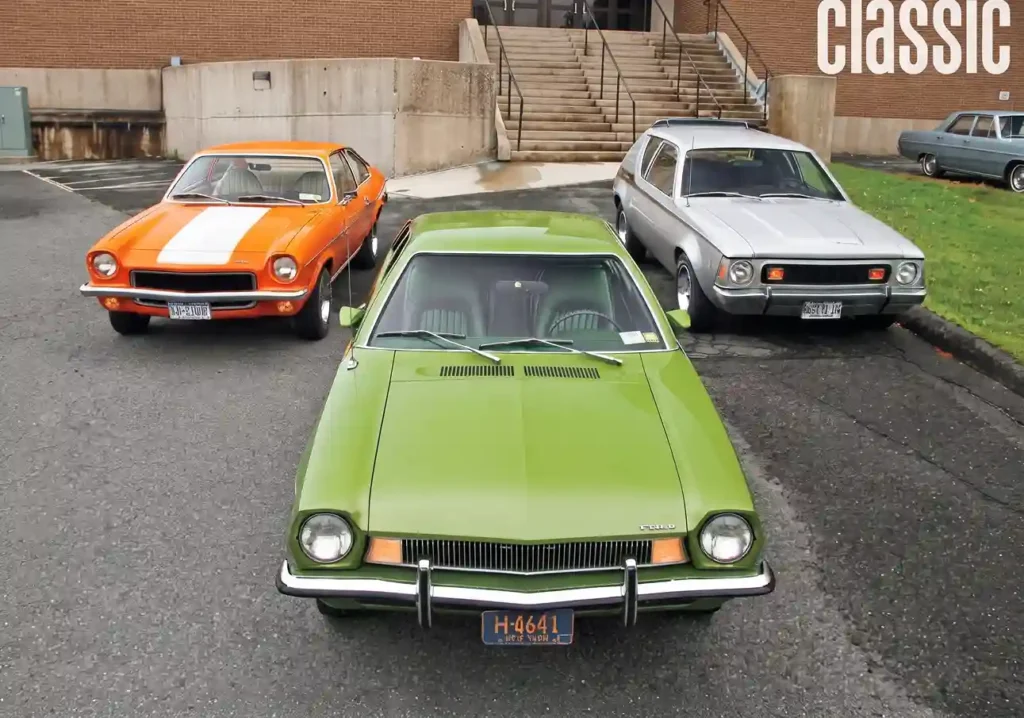

The automotive industry has produced some truly unforgettable vehicles. Some became legends for their performance, beautiful designs, and engineering achievements. Others became famous for entirely different reasons.
Over the decades, manufacturers have introduced cars with questionable styling, unreliable engines, disappointing performance, and engineering decisions that left buyers scratching their heads.
Some were commercial failures, while others sold surprisingly well despite their problems.
From the infamous Yugo to the unusual Pontiac Aztek, here are 15 cars frequently criticized by automotive enthusiasts and historians. They’re ranked using a combination of reliability, safety concerns, engineering problems, build quality, and overall value.
1. Yugo GV (1985–1992)
The Yugo GV became one of the most recognizable examples of a poorly regarded budget car in American automotive history.
Introduced to the United States in the mid-1980s, it attracted attention because of its extremely low starting price. For buyers looking for inexpensive transportation, the price initially seemed difficult to ignore.
Unfortunately, its reputation for inconsistent build quality and reliability problems followed it throughout its American market life.
Owners reported mechanical troubles, electrical issues, and components that could wear out or fail prematurely. Its modest performance and basic construction also made it difficult to compete with better-established alternatives.
The Yugo was not completely without purpose: it offered affordable transportation to buyers who otherwise might have struggled to purchase a new car. But its reputation eventually became much bigger than its original appeal.
Why it ranks here: Its combination of poor reputation, basic engineering, and disappointing ownership experiences made it an automotive punchline for years.
2. Ford Pinto (1971–1980)
The Ford Pinto was introduced during a period when American manufacturers were trying to compete with smaller, more fuel-efficient imports.
It was affordable, compact, and initially successful with buyers who wanted an economical vehicle.
However, the Pinto became infamous because of serious concerns surrounding its rear fuel-tank design and the risk of fuel leakage and fires in certain rear-end collisions.
The controversy led to extensive legal battles, government investigations, and years of negative publicity.
It is important to distinguish the car’s documented safety problems from exaggerated claims sometimes repeated online. Nevertheless, the fuel-system controversy became one of the most significant safety scandals in American automotive history.
Why it ranks here: Serious safety concerns and the controversy surrounding the vehicle permanently damaged its reputation.
3. Chevrolet Vega (1971–1977)
The Chevrolet Vega was supposed to be an important step forward for General Motors.
It was designed as a compact, affordable American car that could compete with smaller vehicles becoming increasingly popular during the early 1970s.
Unfortunately, the Vega developed a reputation for serious corrosion and engine-related problems.
Its aluminum engine design was ambitious, but manufacturing and durability problems affected the vehicle’s reputation. Rust and quality-control complaints further weakened buyer confidence.
Despite its attractive concept and initial interest, the Vega became a frequently cited example of how promising engineering ideas can fail when production quality does not meet expectations.
Why it ranks here: Significant durability and quality problems overshadowed what could have been a successful compact car.
4. Cadillac Cimarron (1982–1988)
Cadillac was traditionally associated with luxury, comfort, and prestige.
The Cimarron was an attempt to bring a smaller, more affordable Cadillac to the market. Unfortunately, many buyers felt that the car did not deliver the luxury experience expected from the brand.
It shared much of its basic architecture with the Chevrolet Cavalier, while its higher price and Cadillac branding created expectations it struggled to meet.
The interior, performance, and overall refinement did not convince many luxury buyers that it justified its position.
Rather than establishing a new standard for compact luxury, the Cimarron became an example of questionable badge engineering.
Why it ranks here: It struggled to justify its premium price and failed to deliver the distinctive experience expected from Cadillac.
5. Pontiac Aztek (2001–2005)
Few modern cars have attracted as much criticism for their appearance as the Pontiac Aztek.
When it arrived, its unusual body shape, awkward proportions, and complicated-looking exterior divided opinions immediately.
Some people disliked its design so strongly that it became a frequent target of automotive jokes.
However, the Aztek was not completely useless. It offered practical features, useful interior space, and a surprisingly versatile layout for outdoor activities.
In fact, some of its ideas were ahead of the mainstream crossover trend.
Its biggest problem was that its controversial appearance made it difficult for many buyers to appreciate its practical qualities.
Why it ranks here: A bold design concept became a commercial and styling controversy, even though the vehicle had some genuinely useful features.
6. AMC Pacer (1975–1980)
The AMC Pacer was one of the strangest-looking American cars of the 1970s.
Its unusually wide body and enormous glass windows gave it a distinctive appearance that earned it the nickname “the fishbowl.”
AMC intended to create a compact car with a roomy interior and a comfortable driving experience.
However, its unconventional styling was not universally appreciated, and its relatively heavy body limited the effectiveness of its modest engine options.
The Pacer also arrived during a period of changing fuel prices and growing demand for economical transportation.
Despite its reputation, some enthusiasts appreciate its unusual design and character today.
Why it ranks here: Its unconventional proportions and performance limitations made it one of the most controversial American compact cars.
7. Trabant 601 (1963–1991)
The Trabant 601 became one of the most recognizable cars associated with East Germany.
It was designed to provide basic transportation for ordinary citizens, but its construction and technology remained outdated for much of its production life.
One of its most unusual features was its bodywork, which used Duroplast panels rather than conventional steel body panels.
Its two-stroke engine, limited performance, and relatively basic engineering made it feel increasingly outdated as automotive technology advanced elsewhere.
Yet the Trabant also became an important historical symbol. For many East Germans, owning one represented independence and an opportunity to travel.
Why it ranks here: Its aging engineering and limited performance made it difficult to compare with more modern vehicles, although its historical importance is undeniable.
8. Reliant Robin (1973–2002)
The Reliant Robin is probably one of the most unusual cars ever sold to ordinary motorists.
Instead of four wheels, it used a three-wheel configuration with one wheel at the front and two at the rear.
Its lightweight construction helped keep operating costs low, and in the United Kingdom, its classification offered certain tax and licensing advantages during different periods.
However, the unusual layout became famous for stability concerns, particularly in extreme maneuvers or when driven carelessly.
Its small engine and basic construction also meant that it was never intended to deliver a conventional modern driving experience.
Despite all the jokes, the Robin developed a loyal following and became a recognizable part of British motoring culture.
Why it ranks here: Its unconventional three-wheel design and limited performance made it an unusual choice for everyday transportation.
9. DeLorean DMC-12 (1981–1983)
The DeLorean DMC-12 looked like something from the future.
Its stainless-steel exterior, dramatic gullwing doors, and distinctive styling made it instantly recognizable.
Unfortunately, the driving experience did not always match its futuristic appearance.
The car’s V6 engine delivered relatively modest performance for a sports car, while its weight and handling characteristics disappointed some enthusiasts.
Production quality and reliability complaints also affected its reputation.
The company eventually collapsed, and production ended after only a short period.
However, its appearance in the Back to the Future movies transformed it into one of the most recognizable collectible cars in history.
Why it ranks here: Its performance and production difficulties failed to match the excitement created by its extraordinary design.
10. Suzuki X-90 (1995–1997)
The Suzuki X-90 was one of the strangest attempts to combine a compact SUV with a sporty two-seat vehicle.
It featured a small body, removable roof panels, and an unusual shape that made it stand out from conventional SUVs.
However, its limited interior space and awkward proportions made it difficult to understand exactly who the target customer was.
It was not particularly practical as a family vehicle, nor was it a serious sports car.
The X-90 was an interesting experiment, but its unusual concept struggled to find a large audience.
Why it ranks here: Its confusing combination of SUV styling and limited two-seat practicality made it difficult to recommend to mainstream buyers.
11. Oldsmobile Cutlass Supreme Diesel (1978–1985)
During the late 1970s, American manufacturers were searching for ways to improve fuel economy.
Oldsmobile responded by introducing diesel engines into passenger cars, including versions of the popular Cutlass Supreme.
The idea sounded promising because diesel engines were associated with fuel efficiency and long-distance durability.
Unfortunately, the early Oldsmobile diesel V8 developed a reputation for serious mechanical problems.
Issues involving head bolts, overheating, and engine durability damaged customer confidence.
For buyers expecting a dependable diesel experience, the reality could be disappointing.
Why it ranks here: The ambitious fuel-economy idea was undermined by major engine reliability problems.
12. Chrysler TC by Maserati (1989–1991)
The Chrysler TC by Maserati was an unusual attempt to combine American luxury with Italian styling and branding.
It was a two-seat convertible developed through cooperation between Chrysler and Maserati.
The vehicle featured distinctive styling and was positioned as a premium alternative to more conventional luxury convertibles.
Unfortunately, its relatively high price and the perception that it shared too much with more ordinary Chrysler products limited its appeal.
Some versions also suffered from parts and reliability concerns.
It was not necessarily a terrible vehicle in every respect, but the expectations created by the Maserati name were difficult to satisfy.
Why it ranks here: Its complicated positioning and high price made it difficult to justify compared with competing luxury cars.
13. Chevrolet Citation (1980–1985)
The Chevrolet Citation was introduced as an important new compact car for General Motors.
It featured front-wheel drive and a modern layout that seemed promising for the changing automotive market.
The vehicle initially attracted considerable attention and sold in large numbers.
However, reliability complaints, quality problems, and recalls gradually damaged its reputation.
Some owners experienced issues with braking, suspension components, and other mechanical systems.
The Citation showed that a modern design and strong initial sales were not enough to guarantee a dependable ownership experience.
Why it ranks here: Its quality and reliability problems became a major disappointment for a vehicle that had initially generated so much interest.
14. Ford Mustang II (1974–1978)
The Mustang II arrived during a difficult period for American performance cars.
Following the fuel crisis and changing emissions requirements, Ford moved toward a smaller, lighter Mustang.
The car was more economical and easier to maneuver than its larger predecessors, but enthusiasts often criticized its limited performance.
The available engines and overall driving experience did not match the expectations created by the original Mustang’s muscle-car reputation.
Still, the Mustang II played an important role in keeping the nameplate alive during a challenging period for the automotive industry.
Why it ranks here: Its reduced performance disappointed traditional Mustang enthusiasts, even though it served an important purpose for Ford.
15. Austin Allegro (1973–1982)
The Austin Allegro became one of the most frequently criticized British cars of its era.
It was designed to be a practical family vehicle, but problems involving build quality, reliability, and engineering decisions affected its reputation.
Its unusual styling also attracted criticism, particularly the early square steering wheel design that became a popular talking point.
The car faced strong competition from more modern European alternatives and struggled to establish a reputation for dependable ownership.
Despite its shortcomings, it remains an interesting part of British automotive history.
Why it ranks here: A combination of quality complaints, controversial design, and mechanical shortcomings made it a frequently criticized vehicle.
Pro Tip: A Bad Reputation Doesn’t Always Mean a Bad Collectible
Some cars that were criticized during their production years have become interesting collector vehicles.
The DeLorean DMC-12, AMC Pacer, and Trabant are good examples. Their unusual designs and historical importance have helped them attract enthusiasts.
Before judging a classic car, consider its original price, intended purpose, technology, and the conditions in which it was developed.
A vehicle can be disappointing as a daily driver while still being fascinating as a piece of automotive history.
Important Note: There Is No Official Ranking of the Worst Cars
The phrase “most useless cars” is subjective.
A car with poor reliability is not necessarily the ugliest vehicle. A vehicle with controversial styling may still offer excellent practicality, while a commercial failure might have introduced ideas that became popular years later.
This ranking is an editorial selection based on widely discussed historical criticisms, not an official verdict from the automotive industry.
Myth vs. Fact: The World’s Most Hated Cars
| Myth | Fact |
|---|---|
| Every badly rated car was a complete failure. | Some criticized vehicles sold well and served their original buyers. |
| The Pontiac Aztek was useless in every way. | It offered practical features and useful interior space. |
| The DeLorean was famous because it was an excellent sports car. | Its styling and movie appearances played a major role in its popularity. |
| The Yugo was expensive when introduced. | Its low purchase price was one of its main selling points. |
| The AMC Pacer had no fans. | It has developed a following among classic-car enthusiasts. |
| Every old car was poorly engineered. | Many historic vehicles introduced important innovations despite their limitations. |
Quick Checklist: What Makes a Car Truly Bad?
When evaluating a vehicle, consider:
- Reliability and mechanical durability.
- Safety and crash protection.
- Engine and transmission performance.
- Build quality and materials.
- Fuel economy and running costs.
- Comfort and everyday practicality.
- Purchase price compared with competing vehicles.
- Whether the vehicle delivered what its manufacturer promised.
Frequently Asked Questions
What is considered the worst car ever made?
There is no universally accepted answer. The Yugo GV, Ford Pinto, Chevrolet Vega, and Pontiac Aztek frequently appear on lists of the most criticized vehicles, but each earned its reputation for different reasons.
Why was the Yugo considered such a bad car?
The Yugo became associated with inconsistent build quality, reliability concerns, and basic engineering. Its extremely low price initially attracted buyers, but its reputation suffered.
Was the Ford Pinto really dangerous?
The Ford Pinto became the subject of serious controversy involving fuel-system safety in rear-end collisions. Its safety history and the resulting legal and regulatory attention made it one of the most notorious vehicles in American automotive history.
Why do people dislike the Pontiac Aztek?
Its unusual exterior styling divided opinions, and many people considered its appearance unattractive. However, it offered practical features that some owners appreciated.
Is the DeLorean DMC-12 actually a good car?
It is an iconic collectible with distinctive styling, but its performance and production quality received criticism. Its cultural significance is arguably greater than its reputation as a sports car.
Do any of these cars have value today?
Yes. Certain examples have become collectible because of their rarity, historical importance, unusual engineering, or cultural significance. Condition and originality strongly affect their value.
Conclusion
The history of automobiles is filled with ambitious ideas, unexpected failures, and vehicles that never quite delivered what buyers expected.
From the unreliable reputation of the Yugo to the controversial styling of the Pontiac Aztek, these 15 cars demonstrate that even major manufacturers can make questionable decisions.
But not every unpopular vehicle deserves to be forgotten. Some became cultural icons, some introduced interesting engineering ideas, and others developed loyal fan communities years after production ended.
Key Takeaway: The worst cars in automotive history are not necessarily the least interesting. Sometimes, their mistakes are exactly what make them unforgettable.