
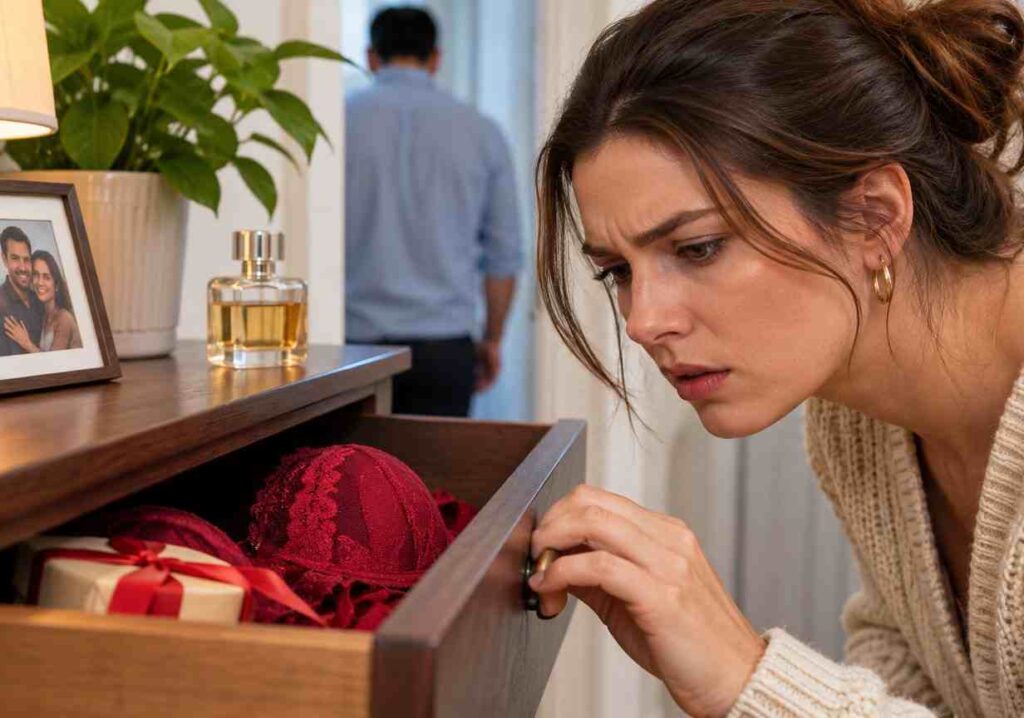

Sometimes, changes in a relationship leave you wondering whether your partner is keeping something from you. You might notice unusual secrecy, unfamiliar belongings, or sudden changes in how certain parts of the house are used. While these signs can raise questions, it’s important to remember that no hiding place alone proves infidelity. Here are eight places people sometimes use to keep personal items out of sight—and why context matters more than assumptions.
1. Bedroom Drawers
Bedroom drawers are common places to store personal belongings because they offer privacy and are easy to organize. Someone who wants to keep an item private might place it beneath folded clothes, inside a small pouch, or at the back of a drawer.
However, drawers naturally contain personal items that partners may not regularly share. A new item or an organized drawer is not evidence of cheating by itself. What matters is whether there is a broader pattern of unexplained secrecy or dishonesty.
2. Closets and Pockets of Stored Clothing
Closets provide plenty of space for keeping items out of immediate view. Small belongings may be tucked inside coat pockets, old bags, storage boxes, or clothing that is rarely worn.
Finding something unfamiliar can understandably raise questions, especially if your partner cannot explain where it came from. Still, there may be innocent explanations, such as an old purchase, a borrowed item, or something that belongs to another family member.
Instead of jumping to conclusions, consider asking a calm, direct question about the item and paying attention to whether the explanation makes sense.
3. Bags, Backpacks, and Luggage
Bags are convenient places to keep personal belongings because they move between home, work, and other locations. A person may store receipts, small gifts, accessories, or personal items in an inside pocket or a compartment that is rarely used.
If your partner suddenly becomes unusually protective of a bag or gives conflicting explanations about unfamiliar belongings, you may feel concerned. Yet people also value privacy around work materials, finances, and everyday personal items.
Myth vs. Fact
| Myth | Fact |
|---|---|
| An unfamiliar item in a partner’s bag proves cheating. | There may be several explanations, and the item needs context. |
| A partner who values privacy must be hiding an affair. | Privacy is normal in healthy relationships, too. |
| Asking questions always leads to an argument. | Calm, respectful communication can help clarify misunderstandings. |
4. Nightstands and Bedside Cabinets
Nightstands often contain personal items that people want close at hand, including medications, journals, charging cables, paperwork, and small accessories. Because these cabinets are private spaces, they can also be used to store belongings someone does not want others to notice.
A sudden change in behavior around a bedside cabinet might make you curious, particularly if it comes alongside other unexplained changes in the relationship. But a closed drawer is not automatically suspicious.
Healthy couples can agree on reasonable boundaries around shared and personal spaces without treating every private belonging as a secret.
5. Home Office Drawers and Desk Organizers
A home office may contain receipts, documents, electronics, spare phones, notebooks, and other items that are easy to keep separate from household belongings. Small objects can disappear into desk organizers or storage compartments without being noticed for months.
If you discover something that seems inconsistent with what your partner has told you, focus on the specific inconsistency rather than assuming the worst. For example, an unexplained purchase may deserve a conversation, but it does not automatically establish an affair.
Honest relationships make room for questions, explanations, and reasonable financial or personal boundaries.
6. Storage Boxes, Suitcases, and Seasonal Containers
Storage boxes in closets, under beds, or in spare rooms can hold belongings that are rarely used. Old suitcases, holiday decorations, seasonal clothing, and keepsake boxes may also contain items that have not been seen in a long time.
If something unexpected turns up in storage, consider whether it could have been packed away during a move, forgotten after a trip, or placed there for another practical reason.
Pro Tip: If something genuinely concerns you, write down the specific behavior or inconsistency that raised the question. This can help you discuss the issue clearly instead of building a conclusion from several ambiguous details.
7. Bathroom Cabinets and Personal-Care Organizers
Bathroom cabinets often contain toiletries, grooming products, cosmetics, medications, and travel-size items. An unfamiliar product may stand out, especially if your partner’s routine has recently changed.
There can be ordinary reasons for these discoveries, including a new purchase, a gift, or a product bought for travel. One unfamiliar item cannot reliably tell you who used it or why it is there.
If you have a genuine concern, ask about the item directly and respectfully. Avoid treating ordinary personal-care products as proof of a relationship outside the partnership.
8. Garage Shelves, Utility Areas, and Rarely Used Corners
Garages, basements, laundry areas, and utility cupboards can become catch-all spaces for things that do not have a regular home. Bags, boxes, old electronics, tools, and miscellaneous belongings can remain there unnoticed for long periods.
Someone might use an out-of-the-way location to keep a possession private, but the same spaces are also used for perfectly ordinary storage. Discovering an unfamiliar object in a rarely used corner does not reveal its purpose without more information.
If the discovery connects to a specific contradiction or broken agreement, focus on that issue and discuss it openly rather than searching the house for more clues.
Conclusion
There is no universal list of places where every unfaithful partner hides things. Bedroom drawers, bags, closets, cabinets, and storage areas are ordinary parts of a home, and finding something unexpected in one of them does not establish infidelity.
If you are worried about your relationship, pay attention to meaningful patterns of dishonesty, inconsistent explanations, or broken agreements—not isolated objects or assumptions. A calm conversation, clear boundaries, and honest communication are more reliable ways to address concerns than secretly searching through every private space.