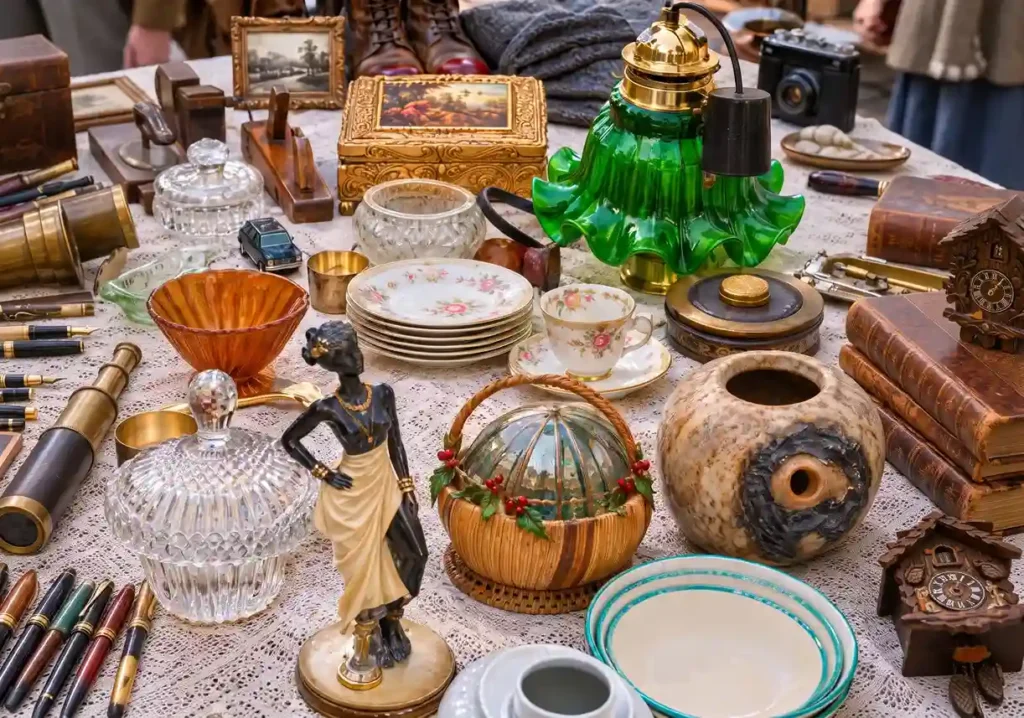

That old glass lamp sitting on your grandmother’s shelf might be more interesting than it looks. The same goes for decorative porcelain figures, tiny trinket boxes, vintage toys, and unusual household objects that people once collected simply because they were beautiful.
Some vintage knick-knacks have become desirable collectibles, especially when they come from recognizable makers, feature unusual designs, or survive in excellent condition. Others may look expensive but have little resale demand.
The exciting part is that you never know what might be hiding in an attic, an old cabinet, or a box from an estate sale.
Here are 23 vintage knick-knacks worth checking before you donate, sell, or throw them away.
1. Vintage Art Glass Lamps
Colorful glass lamps can be among the most attractive finds at an estate sale.
Collectors often look for unusual shapes, distinctive colors, detailed glasswork, and lamps associated with known manufacturers. Some older lamps feature ruffled shades, decorative bases, or intricate patterns that make them stand out.
Green, amber, cranberry, and cobalt-blue glass can be particularly eye-catching.
Before selling one, check the base, electrical components, labels, and any manufacturer’s markings. A beautiful lamp may be collectible, but its value depends on its maker, age, condition, and demand.
What to check: Original parts, maker’s labels, glass condition, and whether the lamp has been repaired.
2. Vintage Porcelain Figurines
Small porcelain figurines were once popular decorative items in many homes.
They often feature flowers, animals, children, dancers, angels, or romantic scenes. Some were mass-produced, while others came from well-known porcelain manufacturers.
Collectors may seek pieces from makers such as Lladro, Royal Doulton, Meissen, and other established studios.
Look underneath the figurine for a painted symbol, impressed mark, model number, or manufacturer’s name.
What to check: Maker’s marks, original paint, missing fingers or accessories, chips, and cracks.
3. Antique and Vintage Trinket Boxes
Tiny decorative boxes were designed to hold jewelry, keepsakes, coins, and other small personal belongings.
Some feature hand-painted porcelain, engraved metal, carved wood, enamel decoration, or elaborate designs.
A box with a recognizable maker or unusual craftsmanship may attract more attention than a generic decorative container.
Check inside the lid, underneath the base, and around the hinges for labels or signatures.
What to check: Original lining, working hinges, decorative details, and maker’s marks.
4. Carnival Glass Bowls and Plates
Carnival glass is known for its colorful, shimmering surface that changes appearance depending on the lighting.
It was produced in many colors and patterns, including marigold, purple, green, and blue.
Collectors often look for particular shapes, patterns, manufacturers, and unusual colors.
A complete set or a rare pattern may be more desirable than an ordinary single piece.
What to check: Pattern identification, color, chips, scratches, and whether the piece has been repaired.
5. Vintage Cut-Glass Paperweights
Glass paperweights can look like tiny works of art.
Some contain colorful flowers, intricate swirls, bubbles, or decorative designs suspended inside clear glass.
Certain makers and studio-produced examples are especially interesting to collectors because of their craftsmanship.
Look for signatures, engraved marks, labels, or distinctive design details on the base.
What to check: Maker, clarity, internal design, surface scratches, and chips.
6. Old Decorative Brass Figurines
Brass animals, miniature statues, candleholders, and decorative figures were common household ornaments.
Some were produced as inexpensive souvenirs, while others feature more detailed workmanship or come from recognized manufacturers.
Small brass objects can sometimes be mistaken for valuable antiques simply because they feel heavy.
However, material alone does not determine resale value.
What to check: Maker’s marks, casting quality, age, original finish, and whether the item is solid brass or plated.
7. Vintage Glass Perfume Bottles
Decorative perfume bottles were often designed to look like miniature pieces of art.
Some have cut-glass bodies, colorful stoppers, engraved details, or unusual shapes.
Collectors may be interested in bottles from historic perfume houses, especially when the original label, stopper, and packaging remain intact.
A complete vintage bottle can be more interesting than an empty bottle missing important components.
What to check: Original stopper, maker’s label, glass condition, and perfume-house identification.
8. Antique Tea Sets and Individual Porcelain Pieces
Old teacups, saucers, sugar bowls, creamers, and decorative plates can attract collectors.
Some people look for complete matching sets, while others search for a particular pattern or manufacturer.
Pieces from recognized porcelain makers may have identifying marks underneath.
Even a single cup can be worth investigating if it belongs to a sought-after pattern.
What to check: Backstamps, pattern names, gold decoration, chips, and matching pieces.
9. Vintage Music Boxes
Music boxes are memorable collectibles because they combine decoration with mechanical movement.
Some feature wooden cases, porcelain figures, dancing characters, or elaborate painted designs.
Older examples may contain mechanical movements that play recognizable melodies when wound.
Collectors often pay attention to the maker, musical mechanism, tune, and overall condition.
What to check: Working mechanism, original key, manufacturer’s name, and missing decorative parts.
10. Old Advertising Tins
Before modern packaging became so common, many products were sold in colorful metal tins.
Coffee, tea, biscuits, tobacco, candy, and household products all had distinctive packaging designs.
Some vintage tins feature beautiful typography, illustrated advertisements, and brand names that are no longer used.
Collectors may seek examples connected to famous companies, unusual designs, or discontinued products.
What to check: Original graphics, brand name, manufacturing details, rust, and condition of the lid.
11. Vintage Costume Jewelry
Old costume jewelry can sometimes be surprisingly collectible.
Brooches, clip-on earrings, necklaces, bracelets, and decorative pins may attract buyers when they come from recognized designers or have unusual materials and designs.
Some pieces feature colorful glass stones, enamel work, intricate metal settings, or distinctive mid-century styling.
Look for signatures, small stamps, designer names, and original presentation boxes.
What to check: Designer markings, missing stones, metal condition, and original components.
12. Bakelite Jewelry and Accessories
Bakelite is an early plastic material that became popular for jewelry and household objects during the first half of the 20th century.
Vintage examples can include colorful bangles, brooches, buttons, carved bracelets, and decorative accessories.
Certain colors, shapes, and carved designs are particularly interesting to collectors.
However, not every old plastic item is Bakelite. Proper identification matters because reproductions and other plastics can look similar.
What to check: Material identification, color, carving, condition, and authenticity.
13. Vintage Glass Candy Dishes
Decorative candy dishes were once common features of living-room tables and dining-room cabinets.
They came in pressed glass, cut glass, colored glass, and decorative metal combinations.
Some have unusual lids, pedestal bases, or intricate patterns.
Certain manufacturers and rare patterns can make these dishes more desirable, particularly when they are in excellent condition.
What to check: Pattern, maker, original lid, glass clarity, and chips around the rim.
14. Small Antique Clocks
Miniature mantel clocks, travel clocks, carriage clocks, and decorative desk clocks can be interesting vintage finds.
Some feature brass cases, porcelain decoration, carved wooden frames, or intricate mechanical movements.
A recognizable clockmaker or original movement can make a piece worth researching.
Before attempting repairs, identify the clock and understand its mechanism. Replacing original parts without checking can affect collector interest.
What to check: Maker’s name, movement, original dial, working condition, and missing keys.
15. Vintage Souvenir Spoons
Decorative souvenir spoons were popular travel keepsakes.
They often feature city names, landmarks, state symbols, coats of arms, or small decorative figures.
Some are made from sterling silver, while others are silver-plated or made from other metals.
The difference is important because sterling silver has material value in addition to any collectible interest.
What to check: Silver hallmarks, place names, maker’s marks, and decorative details.
16. Old Porcelain Character Jugs
Character jugs are decorative ceramic vessels shaped like recognizable people, historical figures, or fictional characters.
Some were produced by well-known pottery manufacturers and became collectible over time.
Collectors may look for specific models, limited editions, unusual variations, and examples with original markings.
Not every old jug is rare, but identifying its maker and model can help determine whether it deserves further research.
What to check: Base markings, model name, production variation, and condition of the handle and rim.
17. Vintage Christmas Ornaments
Old Christmas ornaments can be more interesting than many people realize.
Some vintage examples feature hand-painted glass, unusual shapes, delicate decorations, or distinctive mid-century designs.
Certain ornaments were produced in limited quantities or by recognizable manufacturers.
Original packaging can also make a difference to collectors.
What to check: Manufacturer, original box, paint condition, glass damage, and unusual designs.
18. Antique Miniature Paintings and Portraits
Small framed portraits, miniature landscapes, and decorative paintings can be overlooked in old collections.
Some are simply inexpensive decorative prints, but others may be original artwork or signed pieces.
Look carefully at the back of the frame for gallery labels, handwritten notes, exhibition stickers, or artist signatures.
Avoid assuming that an old-looking frame automatically makes the artwork valuable.
What to check: Artist signature, medium, provenance, original frame, and condition.
19. Vintage Cast-Iron Banks
Mechanical and still banks were popular collectibles, especially those designed for children.
Some feature animals, buildings, characters, or unusual moving mechanisms.
Older cast-iron examples can attract collectors because of their construction, design, and historical appeal.
However, reproductions exist, so age and authenticity should be checked carefully.
What to check: Original paint, construction, mechanism, maker’s marks, and signs of reproduction.
20. Decorative Snuff Boxes
Small snuff boxes were made from materials such as metal, wood, porcelain, and enamel.
Some feature engraved decoration, painted scenes, intricate lids, or precious-metal details.
Certain examples have historical or artistic importance, while ordinary later examples may have modest resale value.
Look for hallmarks, maker’s signatures, and evidence of original materials.
What to check: Material, hallmarks, craftsmanship, decoration, and provenance.
21. Vintage Glass Fruit and Decorative Bowls
Colorful glass fruit, decorative bowls, and miniature glass sculptures were popular display objects.
Some examples feature hand-blown shapes, unusual colors, or distinctive studio craftsmanship.
Collectors may seek pieces associated with particular glassmakers or design movements.
A bright color alone does not prove that an item is rare or valuable.
What to check: Glassmaking technique, signatures, base details, condition, and comparable sales.
22. Old Brass and Silver-Plated Miniatures
Tiny decorative animals, miniature tea sets, small candlesticks, and miniature household objects can sometimes be collectible.
Some were made as souvenirs or gifts, while others were produced by recognizable metalware companies.
A small object with a genuine sterling silver hallmark may have more material value than a similar-looking plated item.
Always inspect the underside and less visible areas for marks.
What to check: Hallmarks, maker’s stamps, material, weight, and original finish.
23. Vintage Decorative Glass Lamps and Lighting Parts
Old glass lamp shades, decorative lamp bases, and unusual lighting components can attract collectors and restoration enthusiasts.
Some pieces feature colorful art glass, pressed patterns, ruffled edges, or distinctive period designs.
Even when the original lamp is incomplete, an individual shade or component may be worth investigating.
However, electrical safety is essential. Old wiring should not be used until it has been checked by someone qualified.
What to check: Maker, glass design, original fittings, condition, and compatibility with safe modern hardware.
Pro Tip: Look for the Maker’s Mark Before You Sell
One of the biggest mistakes people make when selling vintage collectibles is listing an item simply as an “old glass vase” or “antique box.”
A maker’s name, model number, pattern, or signature can help identify exactly what the object is.
Check these places carefully:
- The underside of pottery and porcelain.
- The base of glass objects.
- Inside the lid of trinket boxes.
- The back of paintings and framed artwork.
- The bottom or handle of metal objects.
- Original paper labels and packaging.
Take clear photographs of any marks before attempting to clean the item.
Important Note: Old Does Not Automatically Mean Valuable
A collectible can be decades old and still have very little resale value.
The most important factors usually include:
- Maker: Recognized manufacturers can attract more collector interest.
- Rarity: Unusual models, colors, patterns, and limited production can matter.
- Condition: Chips, cracks, repairs, missing parts, and damage may reduce value.
- Originality: Original labels, finishes, packaging, and components can be important.
- Demand: Buyers must actually want the item.
- Provenance: Reliable history or documentation can sometimes support an item’s significance.
Do not polish, repaint, repair, or throw away original packaging before identifying a potentially valuable piece.
Myth vs. Fact: Finding Valuable Vintage Collectibles
| Myth | Fact |
|---|---|
| Anything made before 1950 is valuable. | Age alone does not determine market value. |
| A heavy object must be expensive. | Weight does not prove that something is made from valuable material. |
| Every porcelain figurine is collectible. | Maker, model, rarity, and condition make a difference. |
| A missing label means an item has no value. | Some valuable objects have no labels or visible marks. |
| An expensive online listing proves an item is valuable. | Actual completed sales are more useful than asking prices. |
| Cleaning always improves a collectible. | Aggressive cleaning can damage original finishes and reduce collector interest. |
Quick Checklist: Before Selling an Old Knick-Knack
- Photograph the object from every side.
- Check underneath for maker’s marks or numbers.
- Identify the material and approximate age.
- Look for cracks, chips, missing pieces, or repairs.
- Search for the exact maker and model.
- Compare recent sold listings, not just asking prices.
- Check whether the original box or accessories are available.
- Consider a specialist appraisal for an unusual or potentially important item.
Frequently Asked Questions
What vintage knick-knacks are worth the most money?
There is no single category that is always the most valuable. Rare art glass, signed studio pottery, recognized porcelain, genuine Bakelite jewelry, sterling silver objects, and unusual mechanical collectibles can attract strong interest when their maker, condition, and rarity are confirmed.
How can I tell if an old decorative item is valuable?
Start by identifying its maker, material, age, and model. Look for signatures, stamps, labels, and hallmarks. Then compare the item with similar pieces that have actually sold.
Are old glass lamps worth anything?
Some vintage glass lamps are collectible, especially those with recognizable makers, unusual designs, original shades, and good condition. Generic or heavily damaged lamps may have much lower resale value.
Should I clean vintage collectibles before selling them?
Not immediately. First identify the object and its materials. Harsh chemicals, polishing compounds, sanding, or aggressive scrubbing can damage original surfaces and reduce collector interest.
Where can I sell vintage knick-knacks?
Depending on the item, you can consider antique shops, estate-sale companies, specialist auctions, local vintage markets, or online marketplaces. Rare or potentially valuable pieces may benefit from a specialist appraisal.
How do I know whether an antique is genuinely old?
Look at construction, materials, maker’s marks, labels, manufacturing techniques, and documented history. A single mark or old-fashioned appearance is not enough to prove authenticity.
Conclusion
That small decorative object sitting on a shelf may have more history—and potentially more collector interest—than you realize.
Vintage lamps, porcelain figurines, glassware, trinket boxes, jewelry, old toys, and decorative metal objects are all worth examining before being discarded.
But the real secret is knowing what you have. Look for maker’s marks, check the condition, identify the material, and compare genuine sold prices before deciding what to do with an old find.
Key Takeaway: Don’t judge a vintage knick-knack by its appearance alone. A little research can help you discover whether an ordinary-looking object is simply old—or something collectors genuinely want.