
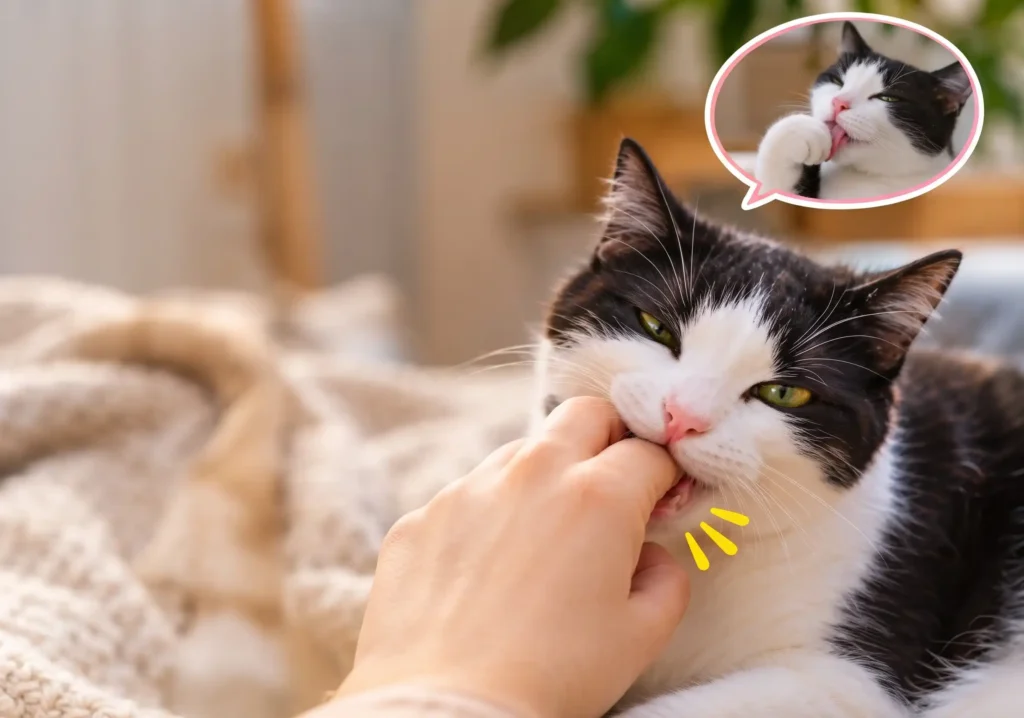

Have you ever been petting your cat, thinking everything is fine, when suddenly your furry friend turns around and bites your hand? It can happen so quickly that you might wonder what went wrong. Some cats give gentle little nibbles during affectionate moments, while others bite because they feel overstimulated, frightened, playful, or uncomfortable. Understanding what your cat is communicating can help you build a closer bond and avoid those unexpected bites.
1. Your Cat May Be Showing Affection
Some cats gently nibble their favorite humans during relaxed moments. You might notice your cat licking your fingers, rubbing its face against your hand, and then giving you a tiny bite.
This behavior is sometimes called a love bite. It may occur during social bonding or grooming-like interactions, but it does not always mean affection. The surrounding body language matters: a relaxed cat that stays close is communicating something different from a tense cat trying to escape.
If your cat gives gentle nibbles, avoid assuming that every bite is a sign of love. Pay attention to whether your cat appears comfortable and willingly continues the interaction.
2. Your Cat May Have Had Enough Petting
One common reason cats bite is overstimulation. A cat might enjoy being stroked for a while, but repeated touching can eventually become uncomfortable.
You may notice your cat’s tail flicking, ears turning backward, skin twitching, or head turning toward your hand. These signals can appear before a bite.
When you notice these changes, stop petting and give your cat some space. Short, gentle interactions are often better than long petting sessions, especially for cats that have a low tolerance for touch.
3. Your Cat May Think Your Hand Is a Toy
Cats have natural hunting instincts, and playful biting can be part of their behavior. Kittens often practice chasing, grabbing, and biting while playing. Some continue this behavior into adulthood, particularly if they have learned that hands and fingers are acceptable toys.
You may notice your cat hiding behind furniture, pouncing on your moving fingers, or grabbing your hand with its front paws.
Instead of encouraging this behavior, redirect your cat toward a wand toy, a soft toy, or another appropriate play object. Avoid wrestling with your cat using your bare hands because even playful bites can cause injuries.
4. Your Cat May Be Trying to Tell You Something
Cats communicate through body language, vocalizations, and behavior. A bite can be a way of ending an interaction when a cat feels uncomfortable or wants to be left alone.
For example, your cat might enjoy sitting beside you without wanting to be touched continuously. Other cats dislike having their paws, belly, or tail handled.
Try offering your hand calmly and allowing your cat to approach you. Pet gently around areas your cat enjoys, such as the cheeks or the area around the ears, and pause frequently to see whether it wants more attention.
Respecting your cat’s boundaries can help it feel safer around you.
5. Fear or Stress Can Trigger Biting
A frightened cat may bite when it feels trapped, threatened, or unable to escape. Loud noises, unfamiliar people, sudden movements, or being picked up against its wishes can sometimes trigger defensive behavior.
You may notice flattened ears, a tense body, dilated pupils, hissing, or an attempt to hide before a defensive bite.
If your cat appears frightened, do not chase, corner, or force it to interact with you. Give it a quiet place to retreat and allow it to approach when it feels comfortable.
Never punish a cat for showing fear. Punishment can increase stress and may make future interactions more difficult.
6. A Sudden Change in Behavior May Mean Discomfort
If a normally gentle cat suddenly starts biting when you touch a particular area, do not automatically assume it is being difficult.
Pain, illness, or another physical problem can make handling uncomfortable. A cat may react defensively when someone touches a sore area, even if it previously enjoyed being petted.
Watch for additional changes, including hiding, reduced appetite, unusual vocalizations, or reluctance to jump and move normally.
If the biting is new, persistent, or associated with signs of pain or illness, arrange a veterinary examination. Identifying the underlying cause is more helpful than trying to discipline the behavior.
7. Your Cat May Be Asking for Space
Sometimes, the simplest explanation is that your cat has finished interacting and wants to be left alone.
Cats have individual preferences. One may happily sit in your lap for an hour, while another may prefer a few seconds of attention before walking away.
If your cat starts moving away, turning its head from your hand, twitching its tail, or becoming tense, let the interaction end. You do not need to keep petting a cat just because it initially approached you.
Giving your cat the freedom to leave can help build trust over time.
Pro Tip
Try the short-petting approach: gently stroke your cat a few times, then pause. If your cat remains relaxed and leans toward your hand, you can continue briefly. If it turns away, stiffens, or flicks its tail, stop and give it space.
Important Note: What to Do If a Cat Bites You
Cat bites can cause infections, even when the wound looks small.
If a bite breaks your skin, immediately wash the wound thoroughly with soap and running water for about 15 minutes and seek prompt medical assessment. A healthcare professional can assess the need for antibiotics, tetanus protection, and rabies post-exposure treatment.
This is especially important if the cat is stray, unfamiliar, unvaccinated, behaving unusually, or unavailable for observation. Do not wait for symptoms if rabies exposure is possible; seek medical advice promptly.
Myth vs. Fact
| Myth | Fact |
|---|---|
| Every cat bite is a sign of love. | Some gentle nibbles occur during bonding, but biting can also signal discomfort, fear, play, or overstimulation. |
| A cat that purrs will never bite. | Cats can purr while enjoying contact and still become uncomfortable with continued petting. |
| Cats bite because they are naturally mean. | Biting is a behavior that can have several causes, including fear, play, pain, and unwanted handling. |
| A tiny cat bite is always harmless. | Even small puncture wounds can become infected and may require medical assessment. |
| Punishing a cat will stop biting. | Punishment can increase fear and stress. Understanding the trigger and changing the interaction is generally more helpful. |
Quick Checklist: How to Avoid Cat Bites
- Keep petting sessions short and gentle.
- Watch for tail flicking, flattened ears, or a tense body.
- Avoid using your hands as toys.
- Never force your cat to be held or touched.
- Give your cat a quiet place to retreat.
- Contact a veterinarian if biting starts suddenly or seems related to pain.
- Wash any bite that breaks the skin and seek prompt medical advice.
Frequently Asked Questions
Why does my cat bite me while I pet it?
Your cat may be overstimulated, uncomfortable with a particular type of touch, playful, or trying to end the interaction. Watch its body language and stop petting when it shows signs of discomfort.
Does a gentle cat bite mean my cat loves me?
It can occur during affectionate interactions, but a gentle bite does not prove affection. Consider the cat’s overall body language and the situation in which the bite occurs.
Why does my cat lick me and then bite me?
Some cats alternate licking and gentle nibbling during social interactions. Others become overstimulated or want the interaction to change. If the biting becomes forceful or your cat seems tense, stop and give it space.
Should I let my cat bite my fingers during play?
It is better to redirect biting toward toys. Encouraging hand-biting can teach a cat that human skin is an acceptable target, which may become painful as the cat grows.
What should I do if my indoor cat bites me?
Wash any wound that breaks the skin thoroughly and seek prompt medical advice, particularly for puncture wounds. A healthcare professional can assess infection risk, tetanus protection, and whether rabies precautions are needed based on the circumstances and your cat’s vaccination status.
Conclusion
Cats cannot explain their feelings with words, so their behavior often provides important clues. A gentle nibble may happen during a relaxed interaction, while a sudden bite can indicate overstimulation, fear, playfulness, or discomfort. By recognizing warning signs, respecting your cat’s boundaries, and responding calmly, you can make interactions safer and more enjoyable for both of you.
Key Takeaway
A cat’s bite does not always mean affection. Watch its body language, respect its limits, and remember that even a small bite that breaks the skin deserves proper cleaning and medical assessment.