
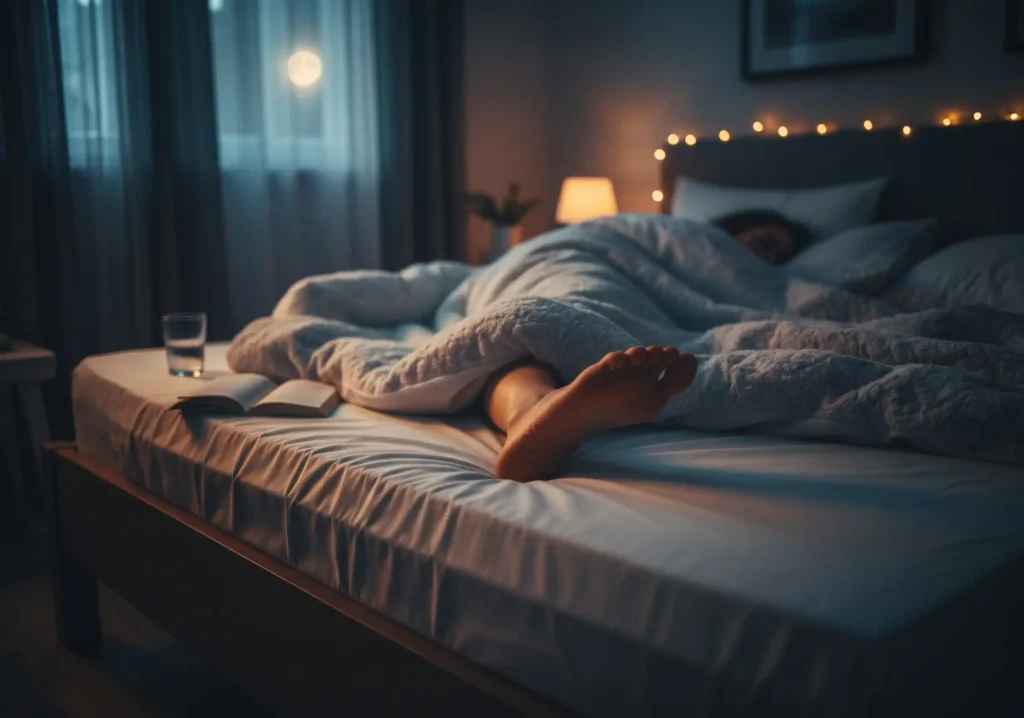

Have you ever climbed into bed, pulled the covers up to your shoulders, and then instinctively stuck one leg out? Maybe you feel too warm with both legs covered, but leaving your entire body uncovered feels uncomfortable.
It turns out this familiar sleeping habit has a plausible scientific explanation. Your body carefully regulates its temperature during sleep, and uncovering one foot or leg may help you feel more comfortable.
The habit does not necessarily mean anything unusual about your health or personality. For many people, it is simply a way to find the right balance between warmth and coolness.
1. Your Body Needs to Cool Down for Sleep
Your body temperature naturally changes throughout the day. As bedtime approaches, your core body temperature generally begins to decrease as part of the normal sleep-wake cycle.
This temperature shift is closely connected to the processes that help prepare your brain and body for sleep.
If your blankets trap too much heat, you may feel uncomfortable or restless. Uncovering a leg creates an opportunity for heat to escape from the exposed skin, potentially helping you feel cooler.
Research on sleep and thermoregulation supports the relationship between temperature regulation and sleep. However, scientists have not established that sticking exactly one leg out is necessary for good sleep.
Sometimes, the simplest explanation is the right one: you are adjusting your bedding to reach a comfortable temperature.
2. Your Feet Play a Role in Temperature Regulation
Your hands and feet are important parts of your body’s temperature-regulation system.
The palms of your hands and the soles of your feet contain specialized blood vessels that allow blood flow near the skin’s surface to change. When these vessels widen, more warm blood can reach the skin, allowing heat to transfer from the body to the surrounding environment.
This process is called peripheral vasodilation.
As your body prepares for sleep, changes in blood flow to the extremities help support heat loss and the normal decline in core temperature.
That is one reason your feet can influence how warm or cool you feel in bed. Exposing a foot may help release some trapped heat, although the effect depends on your room temperature, bedding, clothing, and individual physiology.
3. A Cooler Body Can Feel More Comfortable at Night
Have you ever struggled to fall asleep because your blanket felt too heavy or warm?
Overheating can make it difficult to settle comfortably. You might move around, push the covers away, or uncover your feet without even thinking about it.
A single exposed leg allows you to keep most of your body warm while giving a small area of skin direct contact with the cooler air.
This creates a simple compromise. You do not have to choose between being completely covered and feeling cold all over.
The habit may be particularly noticeable when your bedroom is warm, your duvet is thick, or your mattress retains heat.
Of course, if your room is already cold, leaving a leg exposed may make you uncomfortable instead. Your ideal sleeping arrangement depends on your own temperature preferences.
4. Your Brain Is Constantly Responding to Comfort
You do not have to consciously plan every movement you make in bed.
Your nervous system continually receives information about temperature, pressure, and physical comfort. You may change positions, pull the blanket higher, or uncover a foot in response to those sensations.
These adjustments are examples of everyday behavioral thermoregulation: changing your surroundings or posture to help maintain a comfortable temperature.
The same principle explains why people kick off blankets during warm nights and pull them closer when the room gets chilly.
Sticking one leg out may simply become your preferred way of managing the temperature beneath the covers.
There is no reliable evidence that this particular sleeping position reveals your personality, emotional state, or intelligence. It is better understood as a comfort habit than a psychological sign.
5. Your Bedding Can Trap More Heat Than You Need
Sometimes, the reason has less to do with your body and more to do with your bedding.
Thick comforters, heavy blankets, warm pajamas, and poorly ventilated mattresses can create a warm layer around your skin. This may be cozy when you first get into bed but become uncomfortable as the night continues.
If you repeatedly uncover one leg, your bedding may simply be warmer than you prefer.
You could try using lighter sleepwear, choosing breathable bedding, or adjusting your room temperature. These small changes may help you stay comfortable without repeatedly rearranging the covers.
You do not need to stop the habit if it helps you sleep well. The goal is to find a setup that keeps you comfortable throughout the night.
6. Why Does It Sometimes Feel Better to Uncover Just One Leg?
Leaving one leg outside the covers provides a middle ground between two different sensations.
With both legs covered, you may feel too warm. With the entire blanket pushed aside, you may feel exposed or chilly.
Uncovering one leg lets you preserve the warmth around your torso while exposing a smaller area to cooler air.
This may feel especially satisfying when the rest of your body is comfortably warm.
However, the exact reason varies from person to person. Some people prefer to uncover a foot, others stick out a whole leg, and some sleep best with everything covered.
There is no single correct sleeping position, and the habit does not automatically indicate a special health benefit.
7. Does Sleeping With One Leg Out Improve Sleep?
It may improve comfort for someone who tends to feel overheated under the covers, but there is limited direct research on this exact habit.
Scientific studies support the broader idea that temperature regulation matters for sleep. They show that changes in blood flow to the hands and feet help the body release heat as it prepares for sleep.
That does not mean one-leg-out sleeping is a proven treatment for insomnia or that everyone should adopt it.
If you fall asleep comfortably and wake up feeling rested, there is generally no reason to change a harmless sleeping habit.
If you regularly struggle to fall asleep, wake repeatedly, or feel excessively tired during the day, consider discussing those symptoms with a healthcare professional rather than relying on sleeping-position adjustments alone.
How to Make Your Sleeping Environment More Comfortable
If you often feel too warm at night, a few practical adjustments may help:
- Choose breathable bedding. Lightweight sheets and blankets may reduce the feeling of trapped heat.
- Adjust your room temperature. A cooler, comfortable bedroom may help you settle more easily.
- Wear comfortable sleepwear. Lightweight clothing can help prevent overheating.
- Keep blankets flexible. Use bedding that is easy to move when you need more or less warmth.
- Pay attention to persistent symptoms. Repeated night sweats or unusual temperature intolerance may deserve medical advice, particularly when accompanied by other symptoms.
You do not need to follow a rigid rule about how much of your body should be covered. Comfort is individual, and your needs may change with the season, room temperature, or type of bedding.
The Bottom Line
Sticking one leg out of the covers while sleeping is a common behavior with a plausible explanation: it may help you release excess heat and maintain a comfortable temperature.
Your feet are involved in the body’s normal heat-regulation process, and exposing a foot or leg can change how much heat escapes from your skin.
Still, scientists have not proven that this exact sleeping habit provides a unique health benefit. For most people, it is simply a natural way to adjust to the temperature beneath the blankets.
So, if you regularly fall asleep with one leg outside the covers, there is probably no need to worry. Your body may just be finding the balance that feels right for you.